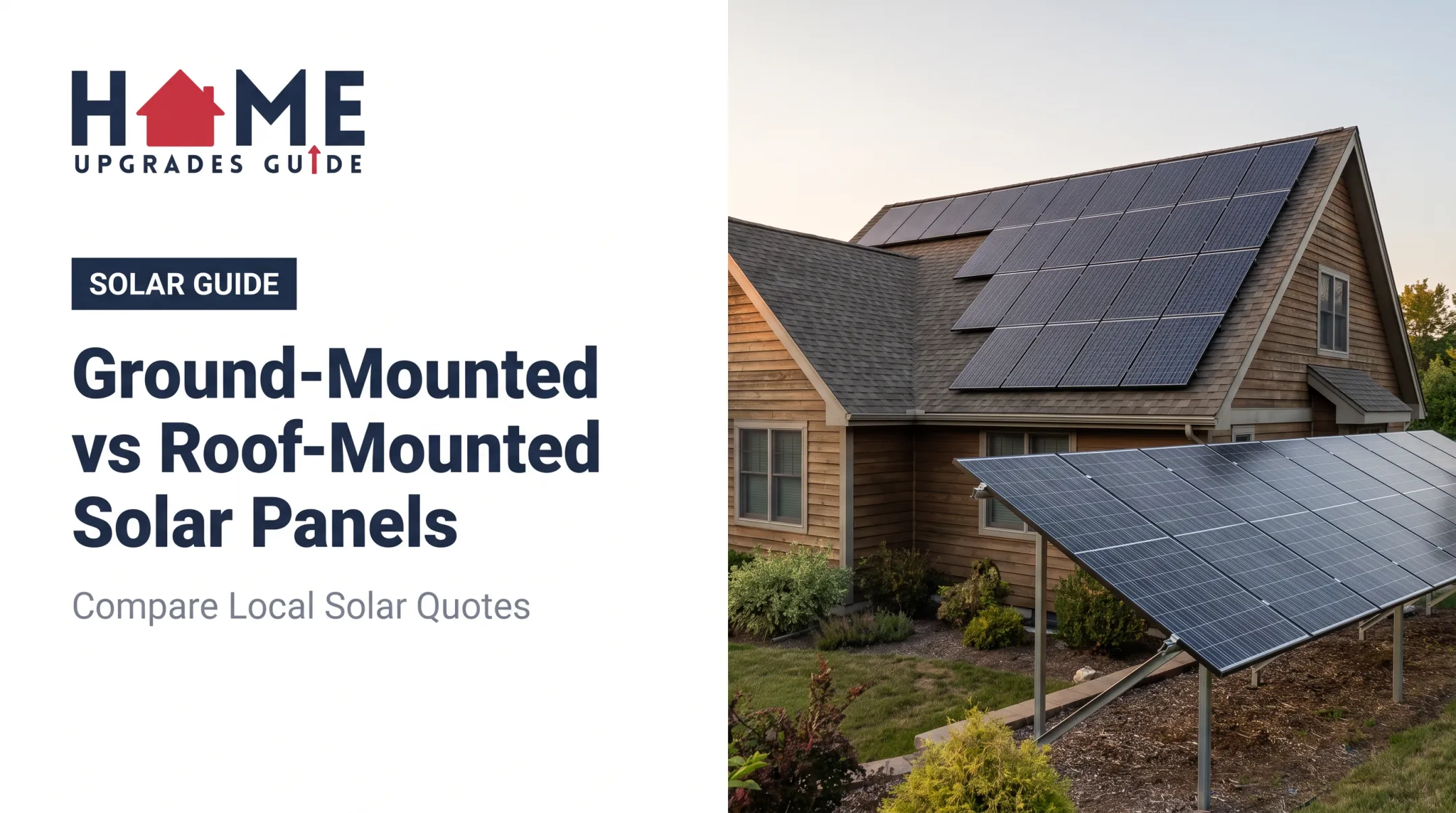

Panels sit on top of your existing roof. Tiles and shingles replace sections of the roof itself, working as both the weatherproofing layer and the power source. That distinction affects your roof replacement timeline, your upfront cost, how much electricity you generate, and how your house looks from the street.
This decision carries real weight right now. U.S. homeowners installed 1,179 megawatts of residential solar in a single quarter, according to SEIA's Q2 2026 report. That's a lot of roofs making this exact choice.
Here's the short version: panels generally win on proven performance and lower cost. Tiles make sense when you already need a new roof and appearance matters more than squeezing out every watt. Let's break down why.
Key Takeaways
- Panels mount above your roof; tiles replace roofing materials with built-in solar cells
- Panels offer wider product availability, simpler repairs, and better cost-per-watt value
- Solar tiles suit new construction or a roof replacement already on the calendar
- Your best option hinges on roof condition, usable space, shading, budget, and local installer expertise
Solar Roof Tiles and Shingles vs. Solar Panels: Quick Comparison
Cost and Total Project Value
Comparing a single price tag per watt misses the bigger picture. A real comparison needs to account for equipment, labor, roof removal, replacement roofing, electrical upgrades, permits, incentives, and financing.
Conventional panels currently run around $2.62 per watt for solar-only installations before incentives, according to EnergySage's 2026 report. That figure held flat compared to the prior six months.
Solar shingle pricing is harder to pin down. One widely cited example, CertainTeed's Solstice shingle, was estimated at roughly $4.50 per watt, or about $45,000 for a 10 kW system before incentives.
That older estimate wasn't broken out into solar-only versus full roof replacement costs, so treat it as a rough historical benchmark rather than a current quote.
What to request from any contractor:
- Itemized roofing versus solar equipment costs
- Labor for removal and reinstallation
- Separate electrical upgrade costs
- Available incentives and financing terms
Appearance and Roof Integration
Solar tiles sit flush with the roofline. GAF's Timberline Solar ES2 shingle, for instance, is less than a quarter-inch deep and installs alongside standard asphalt shingles with no visible rack or frame.
Conventional panels mount on racking above the roof surface. That said, the gap has narrowed. All-black modules, like REC's Alpha Pure-RX, use black frames and backsheets to create a lower-profile look without abandoning the rack-mounted format.
If seamless integration is the priority, tiles win outright. If you just want panels that don't scream "solar array," an all-black module might satisfy you for far less money.
Energy Production and Roof-Space Efficiency
Comparing raw numbers here is tricky because the products aren't measured the same way. GAF rates each individual Timberline Solar shingle at 57 watts. REC's Alpha Pure-RX panel is rated up to 470 watts with 22.6% module efficiency.

Those aren't apples-to-apples figures. One is a single shingle unit; the other is a full module. What actually determines your home's output:
- Roof orientation and pitch
- Shade from trees, chimneys, or neighboring structures
- Available surface area
- Inverter design and wiring
- Local temperature and weather patterns
Ask any installer for a projected system output in kilowatt-hours per year, not just a per-unit wattage spec.
Installation, Maintenance, Durability, and Repair
A roof-integrated solar system and a rack-mounted retrofit involve different labor, access, and repair paths .
Tiles require coordination between roofing work and electrical work on the same surface, which adds complexity. Panels sit above the roof, so a failed unit is often easier to isolate and swap out.
Warranty coverage also varies by product:
| Product | Product Warranty | Performance Warranty |
|---|---|---|
| Tesla Solar Roof | 25 years | 95% power at year 5, then ≤0.5% annual decline |
| GAF Timberline Solar ES2 | N/A | 25-year power-output warranty |
| REC Alpha Pure-RX | 20 years | 25-year performance, 0.25% annual degradation |
Inverters typically last 10 to 25 years and often need replacement before the panels themselves do. Factor that into long-term maintenance planning regardless of which system you choose.
What Are Solar Roof Tiles and Shingles?
Solar tiles, solar shingles, and building-integrated photovoltaics (BIPV) all describe roofing materials with photovoltaic cells built directly into them. The U.S. Department of Energy defines BIPV as solar-generating materials that replace conventional building components, including roofing, skylights, and facades.
Terminology varies by manufacturer, and not every BIPV product replaces an entire roof. Some, like GAF's shingles, install alongside compatible conventional shingles on the same roof plane.
Here's how it works: photovoltaic cells embedded in each tile convert sunlight into electricity. That electricity runs through an inverter before it powers your home, charges a battery, or exports to the grid where local rules allow.
Three installation scenarios dominate this market:
- New home construction
- Full roof replacement
- Selected retrofit systems from specific manufacturers
Most products aren't practical for a small roof repair or a roof with 15-20 years of life left. The complexity and cost only make sense when roofing work is already happening.
Benefits worth weighing:
- Low-profile, integrated appearance
- Combines roofing and power generation into one system
- Appeals to design-sensitive properties
- Some designs use more of the available roof surface
Limitations to consider:
- Higher project complexity than a panel retrofit
- Fewer available products and certified installers
- Potentially lower output per square foot of roof
- Repairs may require a contractor trained in both roofing and electrical work
Use Cases of Solar Roof Tiles and Shingles
Solar tiles make the most sense for homeowners already planning a full roof replacement or new build. Even then, compare the total cost against a conventional roof plus a separate panel system, since that's often the cheaper path.
Appearance can justify the premium in specific situations:
- A carefully designed custom home exterior
- A neighborhood with strict architectural guidelines
- A homeowner who simply doesn't want visible equipment on the roof
HOA rules, historic-district restrictions, and local permitting still apply to solar tiles, so don't assume a flush profile exempts you from approval processes.
A 2023 NREL field study of roofing-integrated PV installations in California found 6.4 worker-hours per kilowatt at reroof sites, compared with 3.5 worker-hours per kilowatt at new-construction sites. Flashing and PV coordination accounted for roughly 60% of total install time, which is why pairing the project with new construction usually goes more smoothly.

What Are Traditional Solar Panels?
Conventional solar panels are photovoltaic modules mounted on racking installed above an existing roof. Sunlight hits the panel cells, generates DC electricity, and an inverter converts it to usable AC power for your home.
Panels dominate the residential market for practical reasons:
- Mature, established supply chains
- Broad product selection across price points
- Standardized installation practices nationwide
- Scalable system sizing for any energy need
- Flexibility to place modules on the roof sections with the best sun exposure
Main benefits:
- Generally lower upfront cost per watt
- Strong energy production per square foot of roof
- Easier component replacement when something fails
- Wide installer availability in most markets
- Compatible with battery storage and monitoring apps
Key limitations:
- Equipment is visibly mounted above the roofline
- Roof penetrations require professional sealing to prevent leaks
- Added weight and wind-load considerations for the roof structure
- You may need to replace the roof before the panels reach end of life
- Shade or poor orientation reduces output significantly
Module efficiency and household savings aren't the same thing. A highly efficient panel on a shaded, poorly oriented roof can still underperform a less efficient panel on an ideal roof plane. Always ask for a site-specific production estimate, not just a spec sheet number.
Use Cases of Solar Panels
Panels make the most sense when your roof is structurally sound with plenty of remaining life. If you're prioritizing production, cost, flexibility, or installation speed, this is almost always the starting point.
For roofs with limited usable space, higher-output modules and adjustable racking help maximize generation. The final layout still has to account for shade patterns, setbacks, vents, skylights, and roof geometry.
One documented example: a Lincoln, Massachusetts homeowner installed a 10.5 kW system using SunPower panels and Enphase microinverters. The reported cash price was $53,000, dropping to roughly $37,000 after a $16,000 federal tax credit. The decision factors cited were sustainability goals, long-term energy-cost stability, and confidence in the installer and equipment choice, not appearance.

Solar Roof Tiles vs. Solar Panels: What Is Better?
Neither option wins universally. The right call depends on your roof's age, energy goals, available roof area, appearance priorities, budget, how long you plan to stay, your climate, and whether qualified providers serve your area.
Choose solar panels when:
- Your existing roof is in good condition
- You want the most established, proven technology
- Your roof has limited usable space
- You value straightforward repairs and replacements
Choose solar tiles or shingles when:
- A roof replacement is already necessary
- You accept a potentially higher total project cost
- Appearance is a major priority for the home
- You've confirmed a qualified provider can document output, roofing performance, and ongoing service support
There's also a middle ground worth knowing about: in-roof framed panels. These sit lower than standard rack-mounted panels but aren't as integrated as a full solar shingle.
They can offer a lower-profile look without the smaller shingle format, though ventilation, serviceability, and roof-replacement requirements vary by product. Ask any installer offering this option to walk you through maintenance access specifically.

Before signing anything, request a quote broken into these line items:
- Roofing work (if applicable)
- Solar equipment and labor
- Electrical upgrades
- Permits and inspections
- Warranty terms for both roofing and solar components
- Incentives and financing charges
- Estimated annual production
- Battery costs, if included
- Projected ongoing maintenance
A quote that bundles everything into one number makes it nearly impossible to compare offers apples-to-apples.
Real-World Examples and Contractor Selection
The two examples above illustrate how different starting points lead to different decisions. The NREL-documented reroof and new-construction sites in California showed that integrated PV installation time depends heavily on whether it's paired with new construction or retrofitted onto an aging roof.
The Lincoln, Massachusetts panel installation shows a homeowner prioritizing proven technology and tax-credit savings over appearance.
What typically triggers each decision:
- An aging roof nearing the end of its service life
- Limited usable roof space
- HOA or design restrictions on visible equipment
- High electricity usage driving a need for maximum output
- Plans for battery storage alongside solar
Vetting a Contractor
Before hiring anyone, confirm:
- Roofing and electrical licensing, depending on the system type
- Manufacturer-specific training for the product being installed
- Local permitting experience in your jurisdiction
- References from similar roof types in your area
- A written production estimate, not a verbal guess
- Clear warranty responsibility between roofer and solar installer
- Ongoing monitoring access and repair procedures
Comparing contractors one phone call at a time eats up hours you probably don't have. HomeUpgradesGuide lets homeowners request free solar quotes in about two minutes, then compare matched local contractors and decide who to contact and when, with no obligation to follow up with every match.
Conclusion
Conventional solar panels remain the practical starting point for most homeowners: proven performance, broader installer availability, and a lower overall cost.
Solar tiles earn their place when a new roof is already in the plans and a seamless appearance matters more than maximum output.
Whatever direction you lean, compare complete itemized proposals rather than a single panel or tile price. Before you sign, review:
- Roof condition and structural readiness
- System output estimates
- Warranty terms and available incentives
- The installer's track record
Ready to see what local contractors would quote for your roof? HomeUpgradesGuide can match you with vetted solar installers in your area so you can compare real options side by side.
Frequently Asked Questions
Are solar roof tiles as effective as solar panels?
Effectiveness depends on the specific product and roof design. Conventional panels generally offer stronger efficiency, wider product availability, and better cost-per-watt value, so compare whole-system output rather than a single efficiency number.
What is the average cost of solar roof tiles?
There's no single U.S. average. Roof size, product choice, labor, permits, and location all drive the final price. Get a quote that separates solar-only costs from full roof replacement before comparing options.
How long do solar tiles last?
Lifespan depends on the manufacturer, climate, and installation quality. Product and performance warranties cover different aspects, so compare those terms directly against conventional panel warranties.