
That's the trap many homeowners fall into. A contractor quotes a "net price" that bundles everything together, and it's hard to tell what's guaranteed versus what's an assumption. Program values change, registration deadlines matter, and some incentives discussed online (including a residential battery rebate) are still proposals, not live programs.
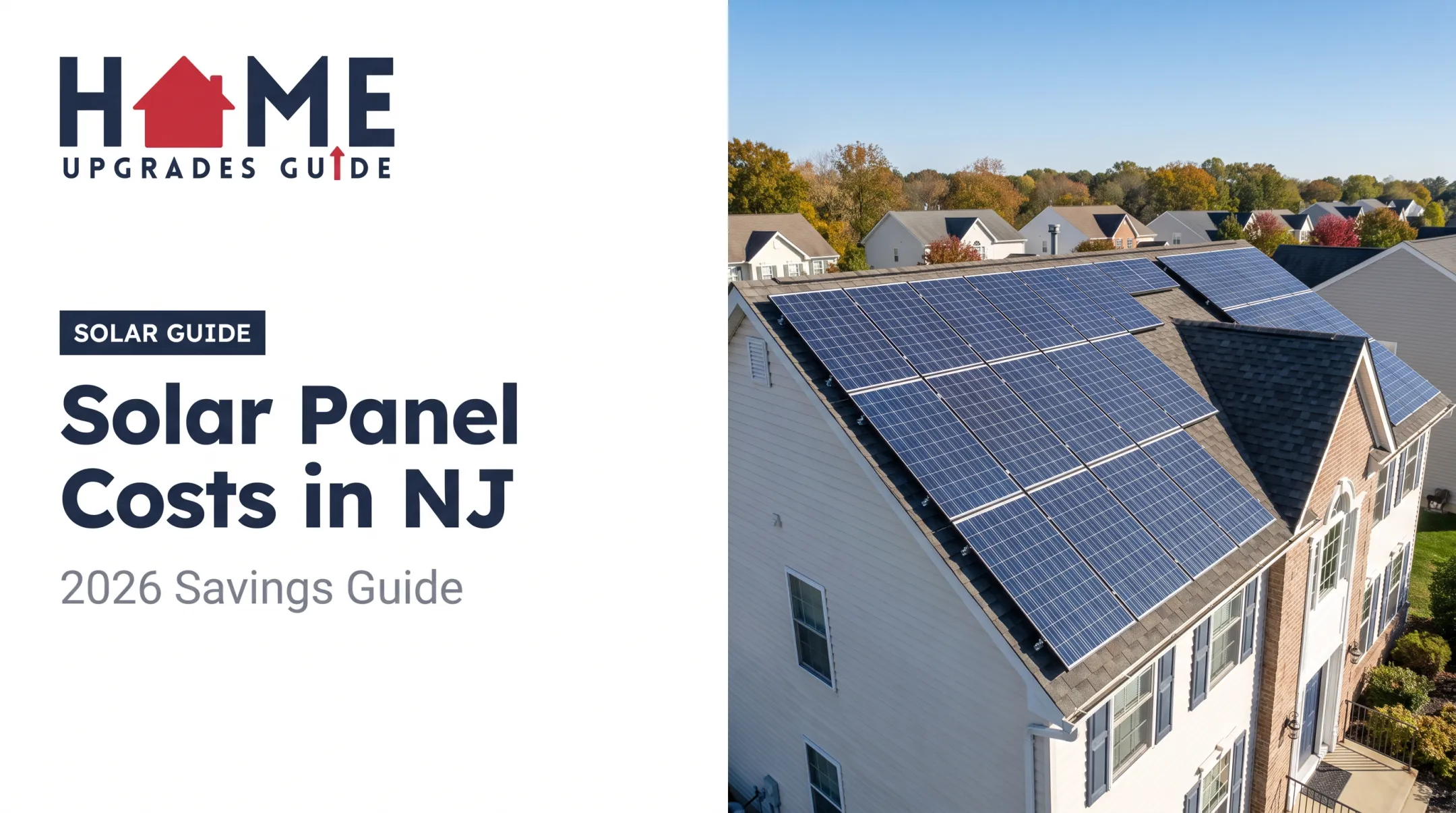
This guide walks through what's actually available to New Jersey homeowners in 2026, who qualifies, how to claim each benefit, and how financing or leasing changes your eligibility. We'll also cover how to compare quotes so you're not comparing apples to oranges.
Key Takeaways
- New Jersey's SuSI/SREC-II program pays per megawatt-hour produced, separate from any federal tax benefit
- The federal 30% residential credit ended for new installations placed in service after December 31, 2025
- Sales and property tax exemptions require specific forms (ST-4 and CRES) to apply
- Net metering credits usage at full retail value, but true-up periods pay wholesale rates for leftover credits
- Lease and PPA customers typically don't receive tax credits or SREC-II payments directly
The Main New Jersey Solar Incentives to Know in 2026
Federal and state incentives work differently. Federal benefits reduce your tax liability. New Jersey's programs include a sales tax break, a property tax exemption, and a production-based payment system. Knowing which is which keeps you from double-counting savings on a sales proposal.
Federal Tax Credit: A 2026 Reality Check
The 30% Residential Clean Energy Credit does not apply to new solar systems placed in service after December 31, 2025. This expiration was enacted through 2025 federal legislation, not a gradual phase-down.
If you installed solar in 2025 and still have unused credit, you may carry that forward into your 2026 tax return. But a system installed in 2026 won't qualify for this credit at all, according to IRS guidance. Any installer who advertises "30% off with the federal credit" for a brand-new 2026 installation is working from outdated information.
SuSI Program and SREC-II Payments
New Jersey's Successor Solar Incentive (SuSI) program pays homeowners through the Administratively Determined Incentive (ADI) pathway. Here's how it works:
- Your system generates one SREC-II for every megawatt-hour produced
- Payments run for 15 years from when your system starts operating
- Residential rate: $77 per SREC-II for registrations on or after July 27, 2026 (down from $85), per NJ Clean Energy
- You must register before construction begins, not after
Your production gets tracked through PJM-EIS GATS once your system is certified, and payments flow through the current SREC-II administrator. Ask your installer who handles this registration and confirm it happens before your system is built.
Sales and Property Tax Exemptions
Two separate exemptions apply to solar in New Jersey:
- Sales tax exemption: Qualifying solar equipment is exempt from New Jersey sales tax. Complete Form ST-4 and give it to the seller at the time of purchase.
- Property tax exemption: Excludes only the added assessed value of your system, not your full tax bill. File Form CRES (via your local construction-code official) with the municipal tax assessor to claim it.
Neither exemption happens automatically. If your installer doesn't mention ST-4 or CRES paperwork, ask directly.
How New Jersey Net Metering and Solar Ownership Affect Your Savings
Net metering lets your solar system offset your electricity use in real time. When your panels produce more than your home consumes, that excess flows to the grid and earns a credit on your utility bill.
How Net Metering Actually Pays Out
New Jersey's investor-owned utilities, including PSE&G, JCP&L, Atlantic City Electric, and Rockland Electric, credit exported solar generation at the full retail rate during your annualized billing period. That's the good part.
At the end of that period, though, any leftover credits get paid out at the avoided-cost or wholesale rate, which is considerably lower than retail. Oversizing to bank large annual credits therefore pays less than using what you generate on site.
New Jersey's clean energy program recommends matching your system to annual electricity needs rather than exceeding them for export. Correct sizing delivers stronger financial results than maximizing for grid credits.

Ownership Structures Change What You Can Claim
How you finance your system determines which incentives you can access:
| Ownership Type | Access to Tax Benefits | SREC-II Payments | Net Metering Credits |
|---|---|---|---|
| Cash purchase | Homeowner owns system, eligible for applicable benefits | Homeowner receives | Homeowner's account |
| Solar loan | Homeowner owns system (treated like cash purchase) | Homeowner receives | Homeowner's account |
| Lease | Third party owns system | Lessor typically retains | Often passed through as bill savings |
| PPA | Third party owns system | Lessor typically retains | Often passed through as bill savings |
If you lease panels or sign a PPA, your provider owns the equipment, which usually means they keep the SREC-II payments and any applicable federal benefit. You might still see lower electric bills, but check your contract for exactly what's passed through.
Don't Double-Count Your Savings
A proposal that lists "federal credit + SREC-II income + net metering savings" as one combined number is oversimplifying things. These are three separate revenue streams with different timing:
- Tax benefits apply once, during filing, and depend on your liability
- SREC-II payments arrive over 15 years, tied to actual production
- Net metering savings show up monthly, tied to your usage patterns
Ask your installer to separate these line items so you can judge each one on its own terms, including how SREC-II income might factor into your taxes.
Solar Batteries, Community Solar, and Other 2026 Options
Rooftop solar isn't the only path, and batteries aren't automatically subsidized just because solar is popular.
Battery Storage: Separating Fact from Proposal
There's no confirmed, open statewide residential battery rebate in New Jersey as of this writing. A distributed-storage incentive has circulated as a straw proposal, with rumored terms like a 150 MW opt-in block and multi-year payments, but proposals aren't programs.
Don't accept a quote that assumes a rebate that hasn't launched.
On the federal side, the battery storage credit expired alongside the solar credit for property placed in service after December 31, 2025.

Batteries can still make sense without a rebate:
- Backup power during outages
- Time-of-use bill management, where your utility's rate structure rewards it
- Participation in an approved demand-response program, if one is available in your area
Community Solar for Renters and Unsuitable Roofs
If you rent, have a shaded roof, or simply don't want rooftop equipment, community solar is worth a look. New Jersey's program expanded significantly, with the New Jersey Board of Public Utilities approving a 3,000 MW increase, according to NJBPU's 2026 announcement.
Subscribers receive a bill credit tied to their share of a shared solar project, rather than owning equipment outright. Terms vary by project, so review:
- Subscription fees and minimum discount guarantees
- Contract length and cancellation terms
- Whether the subscriber organization is registered with NJBPU
Community solar, rooftop solar, and battery ownership each carry different incentive and tax rules. Don't assume rooftop-solar benefits transfer to a community solar subscription.
Who Qualifies and How to Claim New Jersey Solar Incentives
Before signing anything, run through this eligibility checklist:
- You own or have authority over the property where the system will be installed
- The system uses new equipment (not previously installed elsewhere)
- You (not a third party) own the system, if you're pursuing ownership-based incentives
- You have sufficient tax liability to use applicable federal benefits
- Your installation and interconnection timing fits current program rules
- Your system size aligns with your utility's net-metering requirements
- You file required registrations before construction, not after
Recommended sequence:
- Confirm your utility territory and site suitability (roof condition, shading, orientation)
- Get a detailed system proposal with production estimates
- Verify current incentive rules directly with the relevant agency
- Register with SuSI before construction begins, if required
- Complete installation and pass inspection
- Obtain permission to operate from your utility
- Submit post-construction documents (certification, GATS registration)
- Keep tax and production records for the required retention period

Your installer typically handles permitting, interconnection applications, and SuSI registration. You're usually responsible for IRS filing, Form ST-4 at purchase, property tax documentation (Form CRES), and ongoing production monitoring.
Ask your installer for written confirmation of:
- Which incentive assumptions they used in your quote
- Registration deadlines and who's responsible for meeting them
- What happens if paperwork gets rejected or delayed
Because programs and rates change (the SREC-II rate itself shifted mid-2026), verify current details with the IRS, NJBPU, New Jersey Clean Energy, your utility, and your municipal assessor before signing.
This article is educational, not tax advice. Talk to a qualified tax professional about your specific situation, especially around carryforwards, SREC-II income, and lease or PPA arrangements.
How to Compare Solar Quotes Before You Commit
A low monthly payment doesn't tell you much on its own. Compare quotes using this checklist:
- Total contract price, both cash and financed
- System size and estimated annual production
- Degradation assumptions over the system's lifespan
- Equipment and workmanship warranties
- Roof work, monitoring, and maintenance responsibilities
- Incentives listed separately, not folded into one "net cost"
Ask each contractor whether they'll handle permits, interconnection, SuSI registration, and production reporting, plus what happens if an application gets delayed. A contractor who can't answer clearly is a red flag.
Get multiple local quotes rather than picking whoever promises the biggest savings number. HomeUpgradesGuide helps with that step: request free project quotes, compare matches from vetted local contractors serving your area, and decide who to contact and when. You won't field phone calls until you're ready to talk.
Frequently Asked Questions
Will there be a solar tax credit in New Jersey in 2026?
The federal 30% residential credit ended for systems placed in service after December 31, 2025. New installations in 2026 generally won't qualify, though unused 2025 credit may carry forward. Confirm current rules with the IRS or a tax professional.
Is solar still worth it in New Jersey?
It depends on your installation cost, electricity usage, utility rates, financing terms, and roof condition. There's no universal payback period, so run the numbers on your specific proposal rather than relying on averages.
Which solar program is the best in New Jersey?
No single program fits every homeowner. SREC-II payments, net metering, tax exemptions, and community solar each serve different goals, so compare them against your own usage and financial situation.
What is the 20% rule for solar in New Jersey?
There's no officially confirmed "20% rule." Current sizing guidance ties system capacity to your annual electricity consumption, not a fixed overage percentage. Oversized systems may not benefit from favorable net-metering treatment.
Can I claim New Jersey solar incentives if I lease my panels?
Under a lease or PPA, the third-party owner typically retains SREC-II payments and tax benefits, while you may still see lower electric bills. Review your contract to see exactly what's passed through.
Does New Jersey offer a solar battery rebate in 2026?
No confirmed, active statewide residential battery rebate exists as of this writing. A distributed-storage incentive remains a proposal, not a launched program, so verify current status before counting on it.