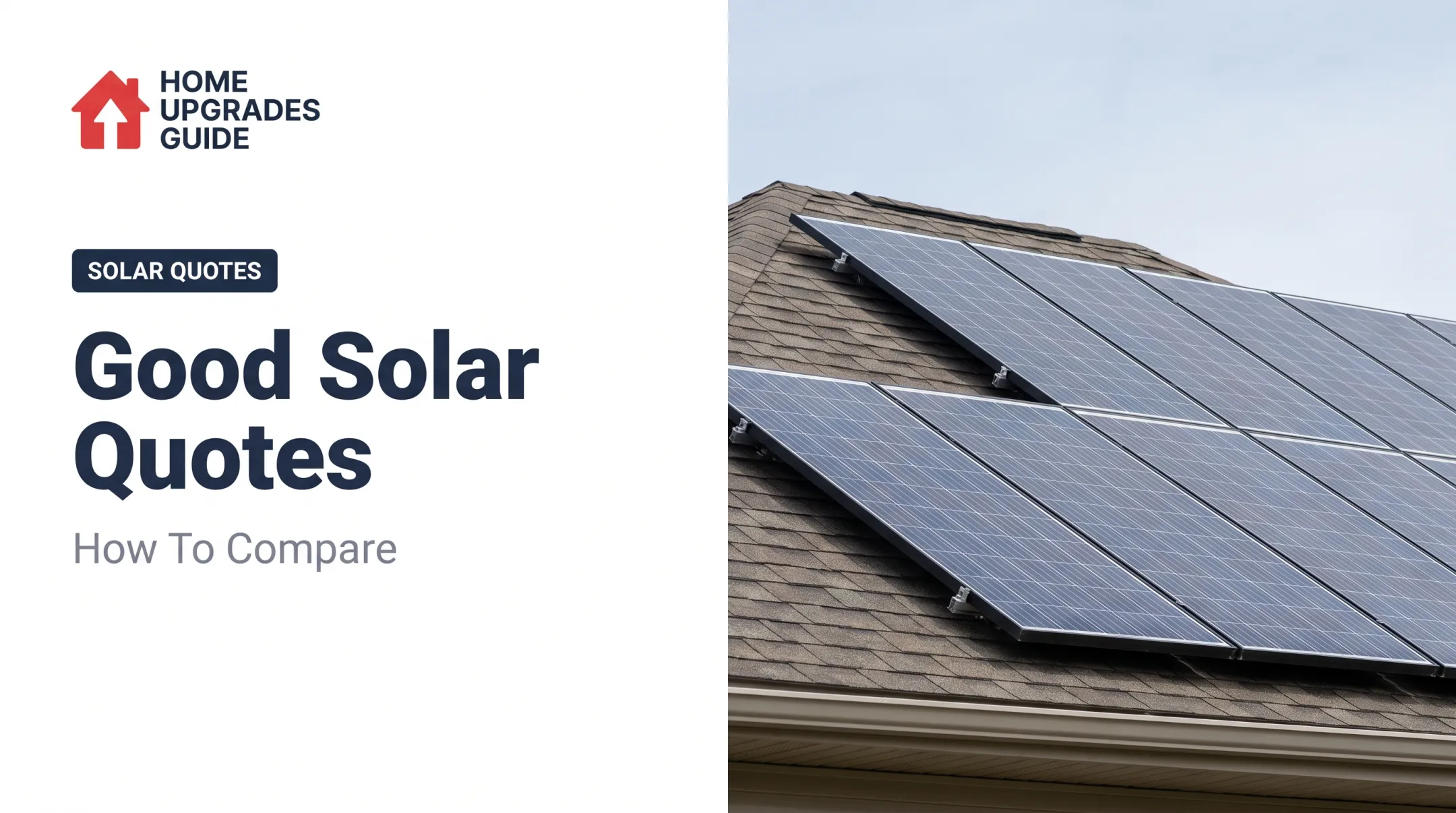

That gap is normal. A typical shopper comparing multiple bids sees nearly $5,500 in spread between the lowest and highest upfront quote, according to EnergySage's marketplace report. The cheapest number rarely tells the whole story.
The goal isn't to find the lowest price. It's to compare three similar proposals on total cost, expected output, equipment quality, warranties, installation scope, and the contractor's track record. This guide walks through how to do that properly. You can also request free, no-obligation project quotes through HomeUpgradesGuide and compare matched contractor options whenever it works for your schedule.
Key Takeaways
- Compare system size, production, equipment, installed cost, warranties, financing, and scope side by side
- Ask each installer to explain design, production-estimate, and battery differences
- Verify licensing, insurance, reviews, permitting, and workmanship warranties before signing
- Treat incentive and utility-savings figures as assumptions until confirmed for your address
Before Requesting Three Solar Quotes
A little prep work before you contact anyone makes the comparison process far easier later.
Gather Your Energy History and Future Plans
Pull about 12 months of electricity bills. This shows your actual usage pattern, including seasonal swings. Note any changes coming up that affect how much power you'll need:
- An electric vehicle purchase
- A heat pump installation or home addition
- Plans for a battery down the road
Document Your Roof and Electrical Setup
Installers will ask about this anyway, so have answers ready:
- Roof age and whether a replacement is due within the next 5-10 years
- Multiple roof planes or unusual angles
- Visible shading from trees or neighboring structures
- Recent repairs or known leaks
- Whether your electrical panel might need an upgrade to handle the new system
Request the Same Proposal Format From Everyone
Ask each installer for the same details so you can line the bids up side by side:
- Cash price and financing options
- System size and estimated annual production
- Exact equipment models
- Incentives applied
- Installation scope, warranties, and expected timeline
That single request keeps you from comparing mismatched proposals three weeks later.
Finally, decide upfront whether you want solar-only quotes or solar-plus-battery quotes. Don't judge one against the other unless the battery's added cost and benefit are clearly broken out separately.
How to Make Three Solar Quotes Comparable
This is where most homeowners get tripped up. Three proposals can look wildly different even when they're all reasonable, because installers make different design choices.
The Like-for-Like Principle
Before you even look at price, check whether the proposals share similar fundamentals:
- System capacity
- Roof layout
- Production goals
- Battery inclusion
- Financing type
Comparing a 7kW solar-only loan quote against a 9kW solar-plus-battery lease isn't really a price comparison at all.
System Size Isn't the Same as Production
A bigger system in kilowatts (kW) doesn't automatically mean better value. What matters is estimated annual generation in kilowatt-hours (kWh) relative to your actual usage. A 10kW system that overshoots your roof's realistic capacity or your household's needs just adds cost without adding value.
The Department of Energy recommends requesting the same system characteristics and metrics across every bid so you're evaluating equivalent numbers, not marketing spin.

Question the Production Assumptions
Ask each installer what's behind their production estimate:
- Roof orientation and tilt
- Shading analysis and any assumed tree removal
- Weather data source
- Panel degradation rate used
- System loss assumptions
Be cautious with "energy offset" percentages too. Installers sometimes use different estimates of your household consumption to calculate that number. Ask for the underlying annual usage and production figures instead of taking the percentage at face value.
Build a Simple Side-by-Side Document
Create one row for every major item:
- Cost
- Production
- Equipment
- Warranty terms
- Included services
Omissions become obvious fast this way. If one installer recommends more panels, a different inverter setup, or an electrical panel upgrade that another didn't mention, ask why directly.
What to Compare in the System and Equipment
Generic descriptions like "high-efficiency panels" tell you nothing. Require the exact manufacturer and model number for every panel, inverter, battery, and monitoring component in each proposal.
Panels: Specs That Actually Matter
Look past brand reputation and compare the actual numbers:
- Rated output and efficiency percentage
- Temperature performance (how output drops in heat)
- Degradation rate assumed over 25 years
- Product warranty versus performance warranty terms
Current premium panels advertise efficiencies in the low-to-mid 22% range. Their 25-year warranties typically guarantee roughly 90-92% of original output remaining. Ask your installer for the current spec sheet rather than relying on a sales pitch.
Inverters: String, Optimizers, or Microinverters
| Inverter Type | Best For | Trade-off |
|---|---|---|
| String inverter | Simple, unshaded roofs | Lower cost, less per-panel monitoring |
| Power optimizers | Partial shading, multiple orientations | Per-module tracking, moderate cost |
| Microinverters | Complex roofs, future battery plans | Highest per-panel visibility, higher cost |
If one quote uses string inverters and another uses microinverters, ask the installer to explain why, especially if your roof has shading or multiple planes.
Batteries: Usable Capacity vs. Peak Power
If a battery is included, don't compare peak power output as if it were the same thing as continuous output. Check:

- Usable energy capacity (kWh), not just total capacity
- Continuous power output at your home's voltage
- Backup functionality during outages
- Operating temperature restrictions
- Whether the quoted price includes all required hardware, or just the battery unit
Separate the Two Warranties
Product warranties cover equipment defects. Workmanship warranties cover installation quality. Different parties handle each one.
Ask specifically:
- Who processes each type of claim
- Whether labor and shipping are covered
- What happens if the installer or manufacturer goes out of business
How to Evaluate Installer Quality, Costs, and Contract Terms
The best equipment in the world doesn't help if the installer behind it is unreliable.
Licensing, Insurance, and Reviews
Verify the contractor's state and local license, electrical qualifications, insurance coverage, and complaint history through your state's official licensing board. Requirements vary significantly by state, so don't assume a license from one state transfers to another. Also confirm:
- Who designs, permits, installs, and services the system
- Whether subcontractors will be used
- Which company is legally responsible for workmanship if something goes wrong
Compare the Full Installed Price, Not the Headline Number
A low advertised price or low monthly payment can hide exclusions. Ask whether the quote includes:
- Roof repairs or electrical panel upgrades
- Trenching for ground-mounted systems
- Permit fees and utility interconnection costs
- Tree removal or monitoring equipment
Financing: Loans, Leases, and PPAs
For loans, compare:
- Cash price, principal, interest rate or APR, and loan term
- Dealer fees
- Whether the loan assumes you'll apply a tax credit as a lump-sum payment
For leases or power-purchase agreements, compare:
- Initial payment and annual escalation rate
- Contract length and buyout terms
- What happens if you sell your home before the contract ends
The federal Residential Clean Energy Credit covers 30% of qualifying system costs for property installed through December 31, 2025, according to IRS guidance. The credit applies based on when the system is installed, not when it's purchased, so timing matters.

Treat every incentive figure in a proposal as an assumption to verify for your specific state and utility, not a guaranteed number.
How to Choose the Best Quote and What Happens Next
Once you've gathered three comparable proposals, resist the urge to just pick the cheapest one.
Build a Weighted Decision
Score each proposal on the factors that actually affect your long-term outcome:
- Technical fit: Does the system size and design match your roof and usage?
- Total financial commitment: Not just the sticker price, but the full cost over the loan or lease term
- Expected production: Backed by disclosed, defensible assumptions
- Equipment quality and warranties: Product and workmanship coverage, clearly separated
- Installer reliability: Licensing, reviews, and communication during the sales process
- Contract clarity: No vague language around scope or responsibilities
Before narrowing your finalists, ask each one to explain anything that stands out: an unusually high or low price, a big production gap versus the other quotes, a missing warranty detail, or a major difference in system size.
Before You Sign
Don't sign anything until the final contract explicitly names:
- The exact equipment, make and model
- Total price and applied incentives
- Installation scope and payment schedule
- Warranty terms for both equipment and labor
- Timeline and who's responsible for permits, inspections, and grid connection
Keep every proposal, design file, warranty document, permit, invoice, and monitoring login in one place. You'll need them for future service calls, a home sale, or a warranty claim.
Ready to start comparing? HomeUpgradesGuide connects homeowners with vetted local solar contractors through a quick four-step process: pick your project, share a few details, enter your address, and review your matches.
Requesting a free quote takes about two minutes, there's no obligation, and you decide which contractors to contact and when.
Frequently Asked Questions
What are solar quotes?
A solar quote is a proposal for your home that outlines system size, equipment, expected annual production, and total installed price. It should also cover incentives, financing options, warranties, and installation terms.
How much will a 10kW solar system cost?
Cost depends on your location, roof complexity, equipment choice, labor rates, permitting fees, available incentives, and whether a battery is included. Compare current local quotes and total installed prices rather than relying on a single national average.
What should I compare in three solar quotes?
Compare system size, annual production estimates, exact equipment models, and total installed cost side by side. Also check warranties, financing terms, included work, installer qualifications, and project timeline using the same format for all three proposals.
Is the cheapest solar quote usually the best?
Not necessarily. A low price can reflect lower-grade equipment, missing installation work, weaker warranties, or overly optimistic production assumptions. Compare total value and scope, not just the number on the first page.
How many solar quotes should I get?
Get at least three comparable proposals so you can spot real pricing and design differences. More than three rarely helps if each one uses different assumptions you cannot reconcile.