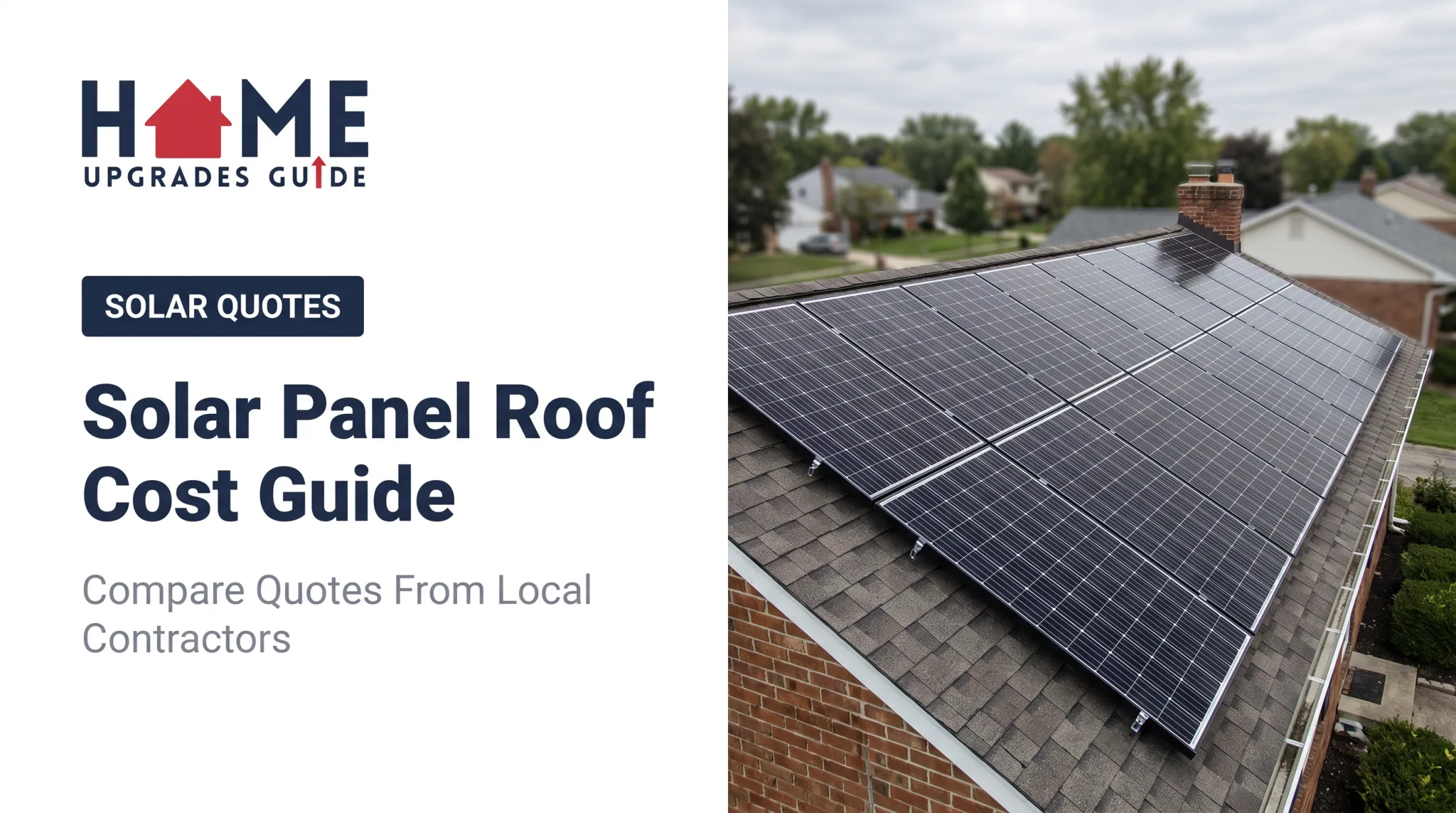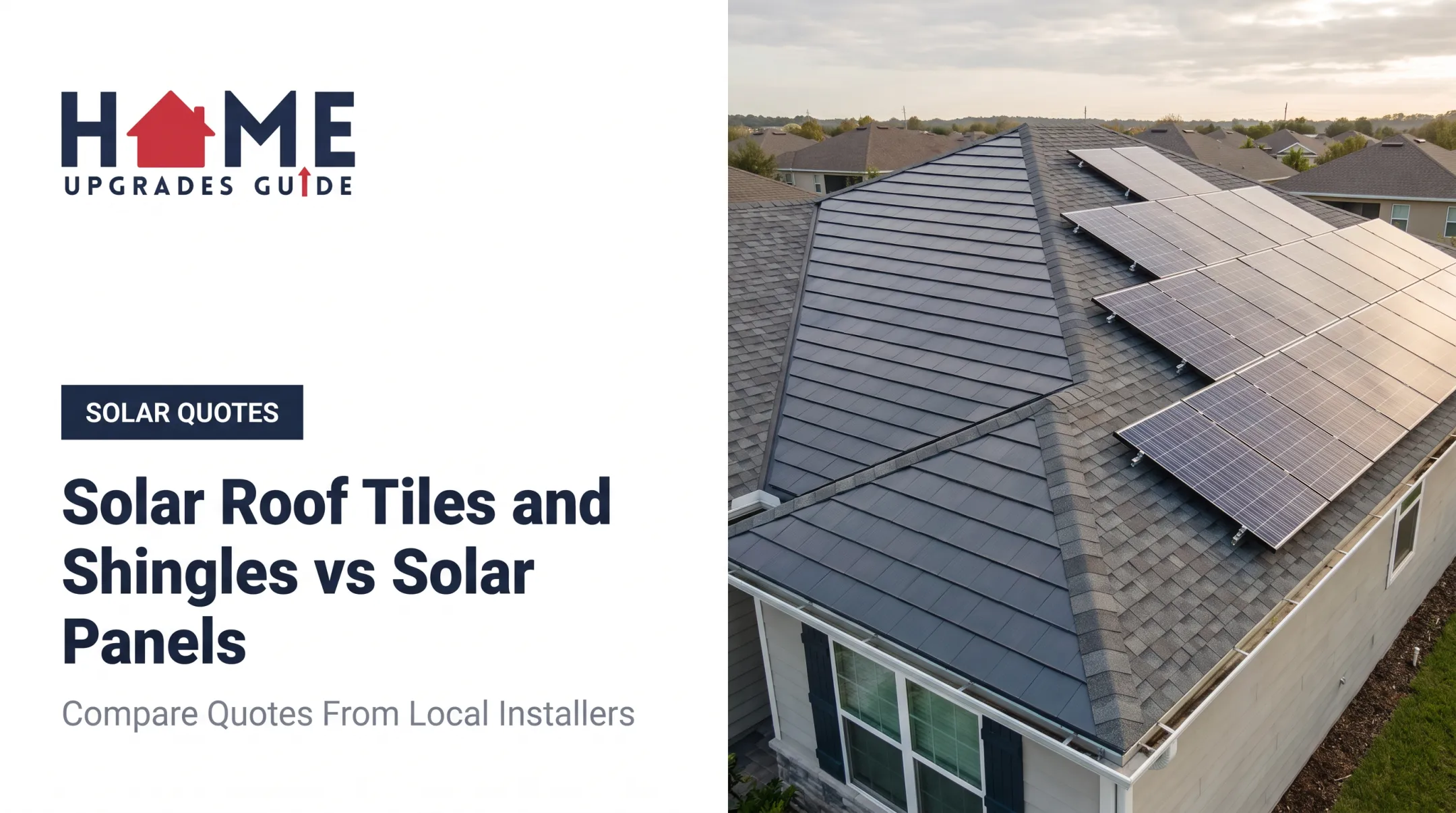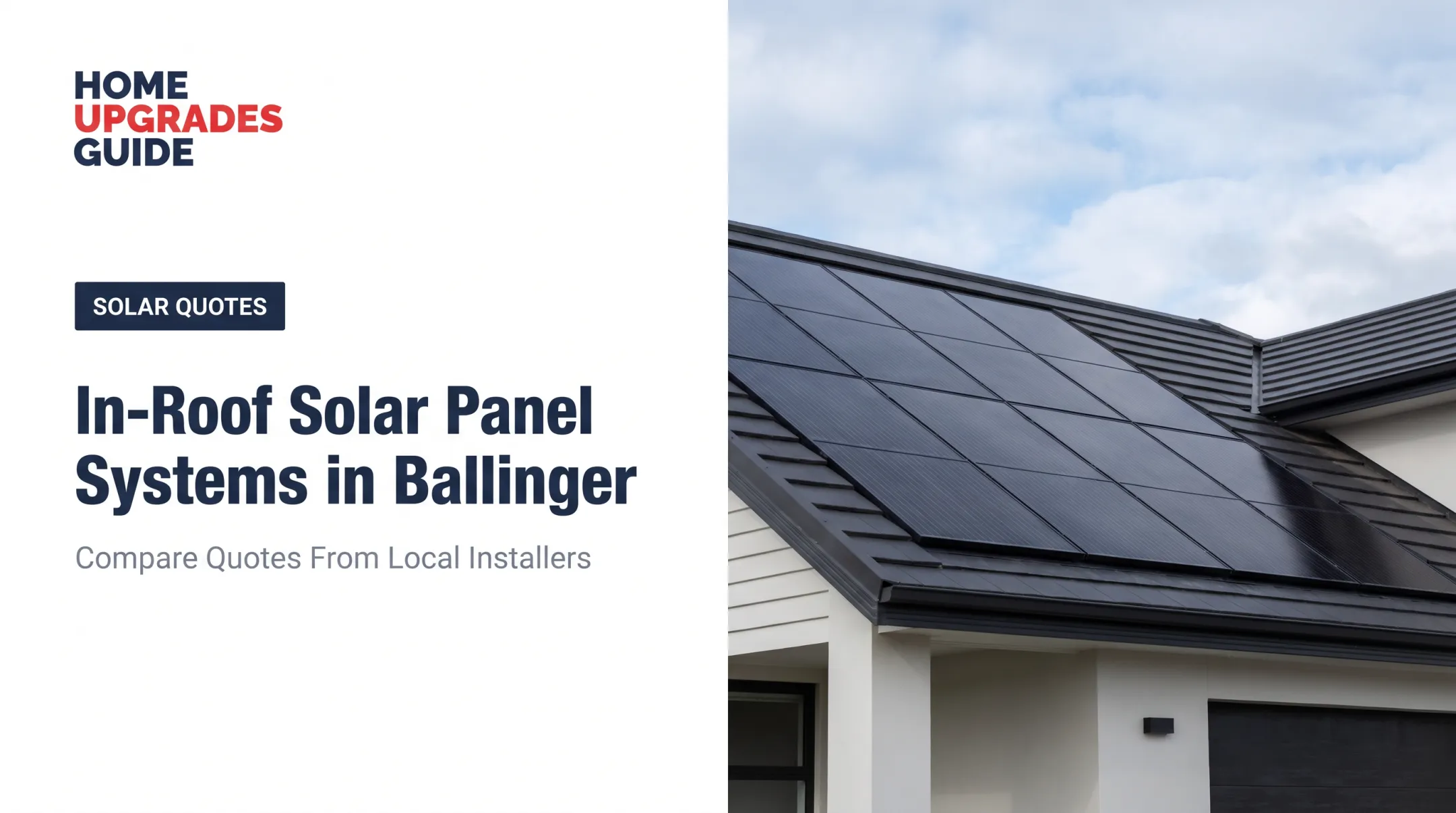

But a few questions come up fast: Can your existing patio actually hold solar panels? Do you need to build something new? And does the extra construction cost make the math work?
This guide walks through structure types, design requirements, realistic costs, permitting basics, and how to tell if a solar patio makes sense for your property before you call a contractor.
Key Takeaways
- Solar panels can work on patios, pergolas, and carports after a professional load check.
- Building new gives more control over orientation, tilt, and wiring than retrofitting.
- Project cost covers structure, solar equipment, labor, electrical, engineering, and permits.
- Site conditions and codes vary too much for average prices; compare multiple local quotes.
What Is a Solar Panel Patio Roof or Cover?
A solar patio cover is an outdoor structure built to provide shade while supporting photovoltaic panels that feed power to your home, a battery, or an EV charger. The panels either sit on racking above a solid roof or, in some building-integrated designs, serve as the roof material itself.
The Department of Energy calls that category building-integrated photovoltaics, or BIPV systems.
You'll see several related terms used loosely:
- Solar pergola – often open-lattice, which may not offer enough continuous surface for conventional panel mounting
- Solar gazebo – a freestanding, fully roofed structure
- Solar awning – building-attached overhead shading
- Solar canopy – a standalone overhead shade structure
- Solar carport – vehicle shelter with integrated PV, classified separately from patio covers under most building codes
That classification has real permitting consequences. The 2024 International Building Code's patio appendix specifically excludes carports, so a contractor can't reuse patio-cover rules for a carport design.
Common Residential Configurations
Most homeowners end up choosing between three setups:
- Attached cover connected directly to the house, sharing a wall or ledger board
- Freestanding backyard structure, built independent of the home
- Carport-style design, which shades vehicles and can support EV charging equipment
Why Homeowners Go This Route
People consider patio solar for practical reasons:
- Shaded or undersized main roof
- Upcoming roof replacement
- Wish to avoid new roof penetrations
- Need for shaded outdoor living space anyway
The trade-off is straightforward. A patio structure lets you design around sun exposure, but building it from scratch adds cost, space, and approval steps that rooftop solar doesn't require.
Solar Patio Roof Design Options and Materials
Before picking materials, decide whether you're retrofitting an existing cover or building new. Retrofits save money upfront but limit your options. New construction costs more but lets you optimize everything from day one: orientation, tilt, drainage, and wiring routes.
What Affects Solar Production
A handful of site factors determine how much power your patio system actually generates:
- Orientation and tilt of the roof surface
- Usable area free of vents, skylights, or structural obstructions
- Shading from nearby trees, fences, or the house itself
- Row spacing if you're installing multiple panel rows
- Local climate, including average sun hours and snow load
Comparing Structural Materials
| Material | Strengths | Watch for |
|---|---|---|
| Wood | Blends with traditional homes, flexible design | Needs weather protection, periodic maintenance, corrosion-safe fasteners |
| Aluminum | Lightweight, corrosion-resistant | Requires project-specific engineering for panel, wind, and snow loads |
| Steel | High strength, long spans | Needs proper coating and corrosion protection for your climate |
Manufacturer brochures from companies like Lumos Solar show steel and aluminum SolarPorts with powder-coated frames, but a product spec sheet doesn't replace project-specific engineering for your site.
Roof Surface Choices
You've got a few options for the actual roof-level material:
- Solid roof panels with conventional racking on top
- Metal roofing paired with standard solar racking
- Integrated PV modules that function as the roof surface itself
- Standard racking over an existing solid roof
Each option differs in appearance, drainage behavior, ventilation, and how easy future panel replacement will be.
Making the Space Work Harder
Many homeowners add seating, outdoor kitchens, lighting, fans, or EV charging beneath the cover. Just know that every added electrical load changes your system design and permitting scope. An EV charger circuit, for instance, isn't the same permit application as a simple lighting load.
Can Solar Panels Be Installed on an Existing Patio Roof?
Short answer: sometimes, but not automatically. A structure that's held up a standard patio covering for years isn't necessarily rated for solar equipment, racking, wiring, and the wind loads panels create.
The Structural Inspection Checklist
A qualified inspector should check:
- Posts and footings for stability and depth
- Beams and rafters for size and condition
- Attachment points and connection hardware
- Roof condition, including corrosion or rot
- Overall capacity to resist panel weight plus wind uplift
Here's the detail most people miss: even where local codes adopt a patio-cover standard requiring a minimum 10 psf live load, that figure isn't a built-in allowance for solar equipment. It's a baseline for the structure itself.
The 2024 IBC is explicit that roofs supporting PV must carry the full panel dead load, support-frame concentrations, and any added structural design considerations like PV-created snow drifts.
Retrofit Options When the Structure Falls Short
If your existing cover doesn't pass inspection, you generally have four paths:
- Reinforce existing beams to handle added weight
- Add posts or bracing for extra support
- Replace a weak roof section entirely
- Rebuild the cover when reinforcement isn't cost-effective

Checking Solar Access Before Committing
Beyond structural capacity, confirm the site actually makes sense for solar:
- Run a shade analysis across the day and seasons
- Measure available panel area and usable orientation
- Check tilt options given the existing roofline
- Measure distance to your main electrical panel
- Determine if trenching or exterior conduit will be needed to connect the array
Don't skip the professional assessment. Drilling into an untested structure, attaching rails, or ordering equipment before a structural and solar site review is how projects end up with code violations or safety issues down the line.
Electrical, Safety, and Permit Requirements
Most patio solar projects need two separate approvals: a building permit for the structure itself, and an electrical or solar permit for the photovoltaic system. Requirements vary by city, county, utility, and even the specific attachment method you use, so don't assume your neighbor's permit process matches yours.
Electrical Planning Basics
Your electrician needs to plan the full circuit path:
- Full route from the array to the inverter and main panel
- Conduit protection for exposed wiring runs
- Grounding and bonding per code
- Readily accessible disconnects
- Proper labeling throughout the system
- Rapid-shutdown compliance where applicable
The 2023 National Electrical Code, as referenced in New York's inspection guidance, requires rapid-shutdown initiation devices on one- and two-family dwellings to be outdoors and accessible. Your local jurisdiction may have its own amendments, so verify before finalizing design.
Structural Engineering Still Matters
Beyond wiring, your structure needs engineering sign-off for:
- Local wind, snow, seismic, and rain loads
- Waterproofing around every attachment point
- Safe clearance for maintenance access beneath and around the structure
Use licensed, insured professionals for structural design, grid-connected electrical work, permitting, and utility interconnection. Some tasks might be DIY-friendly in certain jurisdictions, but confirm local rules and your exact system type first. Unpermitted work can block utility interconnection and complicate a future home sale.

How Much Does a Solar Patio Cover Cost, and Is It Worth It?
Think of your budget in separate line items, not one number:
- Patio-cover materials and foundation work
- Solar panels and racking
- Inverter or microinverters
- Battery or EV-charging equipment, if included
- Electrical work and any panel upgrades
- Engineering and permits
- Trenching and site preparation
- Labor
What the Numbers Actually Show
National pricing data for complete solar patio structures is limited. The Department of Energy's benchmark for rooftop PV-only systems sits around $2.95 per watt (DC) as a modeled market price for Q1 2025, reported in 2024 dollars.
That figure covers panels and installation on an existing roof. It does not include a newly built patio structure, foundation work, or battery storage.
In other words, don't treat rooftop PV pricing as a stand-in for a full patio build. Your structure, electrical work, and site prep get priced separately and add on top.
Main Cost Drivers
- Cover dimensions and footprint
- Attached versus freestanding design
- Material choice (wood, aluminum, steel)
- Existing roof condition, if retrofitting
- Panel capacity and shade mitigation needs
- Electrical-panel upgrades
- Trenching distance and site access difficulty
- Local labor rates and required engineering
Comparing Your Options
| Option | Best for | Trade-off |
|---|---|---|
| Rooftop solar | Unshaded, structurally sound roof | Cheapest per watt, no added structure |
| Ground-mounted solar | Open yard space, flexible orientation | Uses yard space, needs its own foundation |
| Solar carport | Vehicle shade + EV charging | Vehicle classification affects permitting rules |
| Solar patio cover | Shaded roof + desired outdoor space | Highest total cost due to new construction |
A Balanced "Worth It" Framework
A patio solar system tends to make sense when:
- Your roof is genuinely unsuitable (shaded, undersized, aging)
- You already wanted a patio cover for outdoor living anyway
- Your yard gets strong sun exposure where the roof doesn't
The case weakens when you build the structure only to hold panels, the site is partially shaded, or a simpler spot like a detached garage roof is available.
Incentives Worth Checking
The federal Residential Clean Energy Credit currently offers 30% for qualifying solar property installed through December 31, 2025, according to the IRS's current guidance. Property placed in service after that date won't qualify under current rules.

Traditional structural components generally don't qualify for the credit, so don't assume the entire patio frame gets covered. State, utility, and local incentives vary widely, so confirm eligibility for your specific project and equipment before budgeting them in.
How to Choose a Solar Patio Contractor and Compare Quotes
Not every solar installer has experience with structural builds, and not every patio contractor understands PV systems. You often need both skill sets working together, or a single contractor comfortable managing both scopes.
Contractor Evaluation Checklist
Look for:
- Relevant solar and structural construction experience
- Current licensing and insurance
- Permitting support included in their process
- Utility-interconnection knowledge
- Equipment warranties and workmanship coverage
- Verifiable references
- Monitoring setup after installation
- Clear ownership of responsibility for the patio construction itself
What a Good Proposal Includes
Request itemized quotes that separately break out:
- Structure, solar system, and electrical work
- Engineering fees, permits, and site preparation
- Expected production assumptions
- Warranties and exclusions
- Payment schedule and change-order terms
Vague, bundled pricing makes it nearly impossible to compare contractors fairly. If a quote doesn't separate these categories, ask for a revised version before signing anything.
HomeUpgradesGuide helps homeowners request free project quotes and get matched with vetted local solar contractors, without picking up the phone until they're ready.
Matching runs on your actual address, so you reach professionals who service your area rather than a resold contact list. You control which contractors you talk to and when, and the request takes about two minutes.
Get at least one site-specific assessment, and compare multiple quotes side by side. Picking a contractor on lowest headline price alone is a common way projects go over budget later.
Frequently Asked Questions
How much does a solar patio cover cost?
Pricing depends on structure size, solar-system size, materials, site work, electrical upgrades, engineering, permits, labor, and available incentives. There's no single reliable national figure, so get itemized local quotes for your specific project.
Can solar panels be installed on a patio roof?
Sometimes, but only if the structure is confirmed structurally suitable and the location gets adequate sunlight. A professional structural, electrical, and code review is necessary before any installation begins.
Are patio solar panels worth it?
It depends on your roof situation and whether you already wanted a patio cover. The combination of electricity generation and shaded outdoor space can justify the added construction cost when your house roof isn't a good solar option.
Which type of roof is best for solar panels?
The best roof is structurally sound, mostly unshaded, properly oriented, and adequately sized, with good drainage and maintenance access. No single material is universally "best" across every property.
What is a solar deck?
A solar deck typically refers to a deck or elevated outdoor structure incorporating solar panels or a solar canopy. Design must address structural loads, waterproofing, railings, wiring, and local permitting requirements.