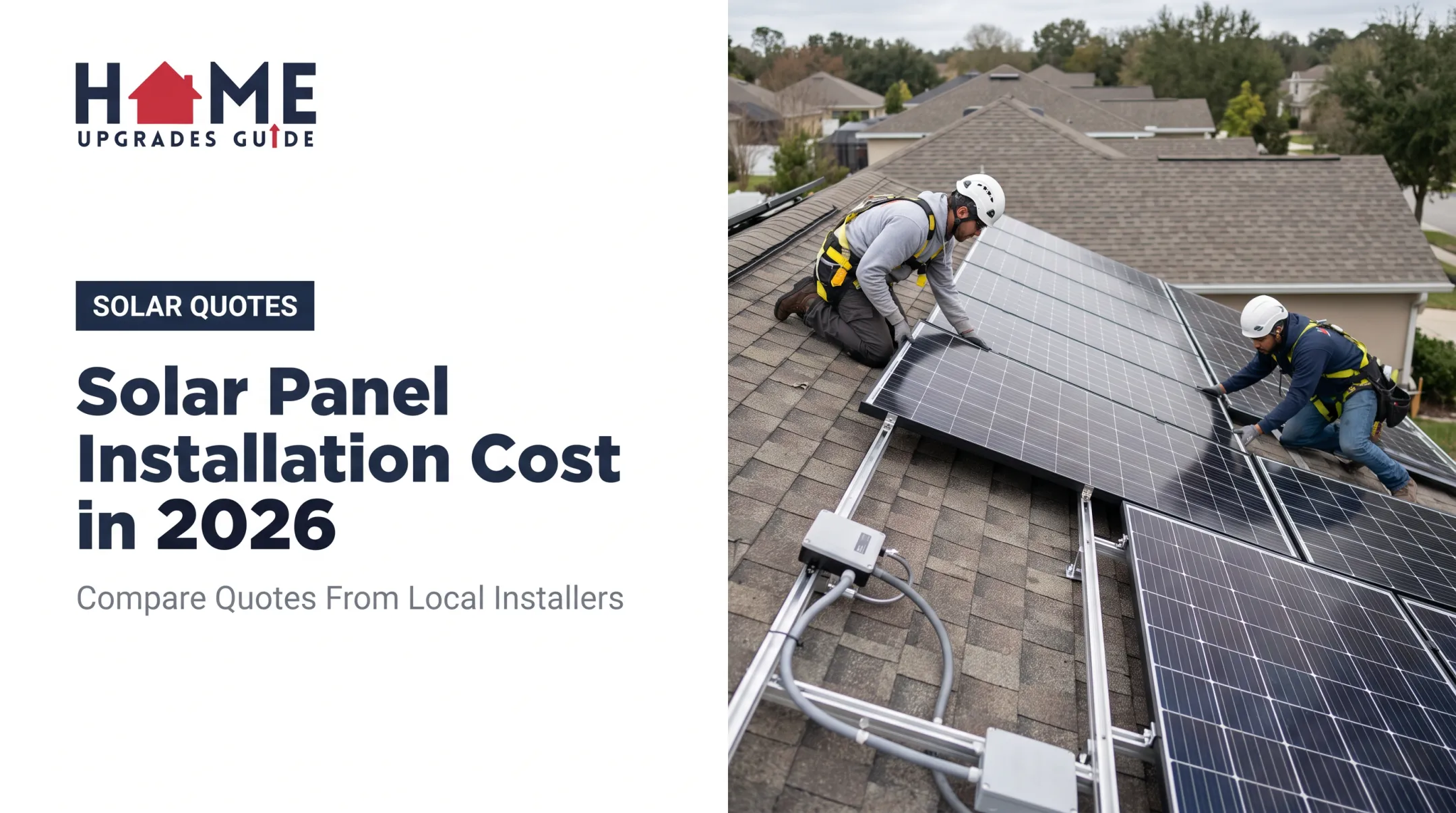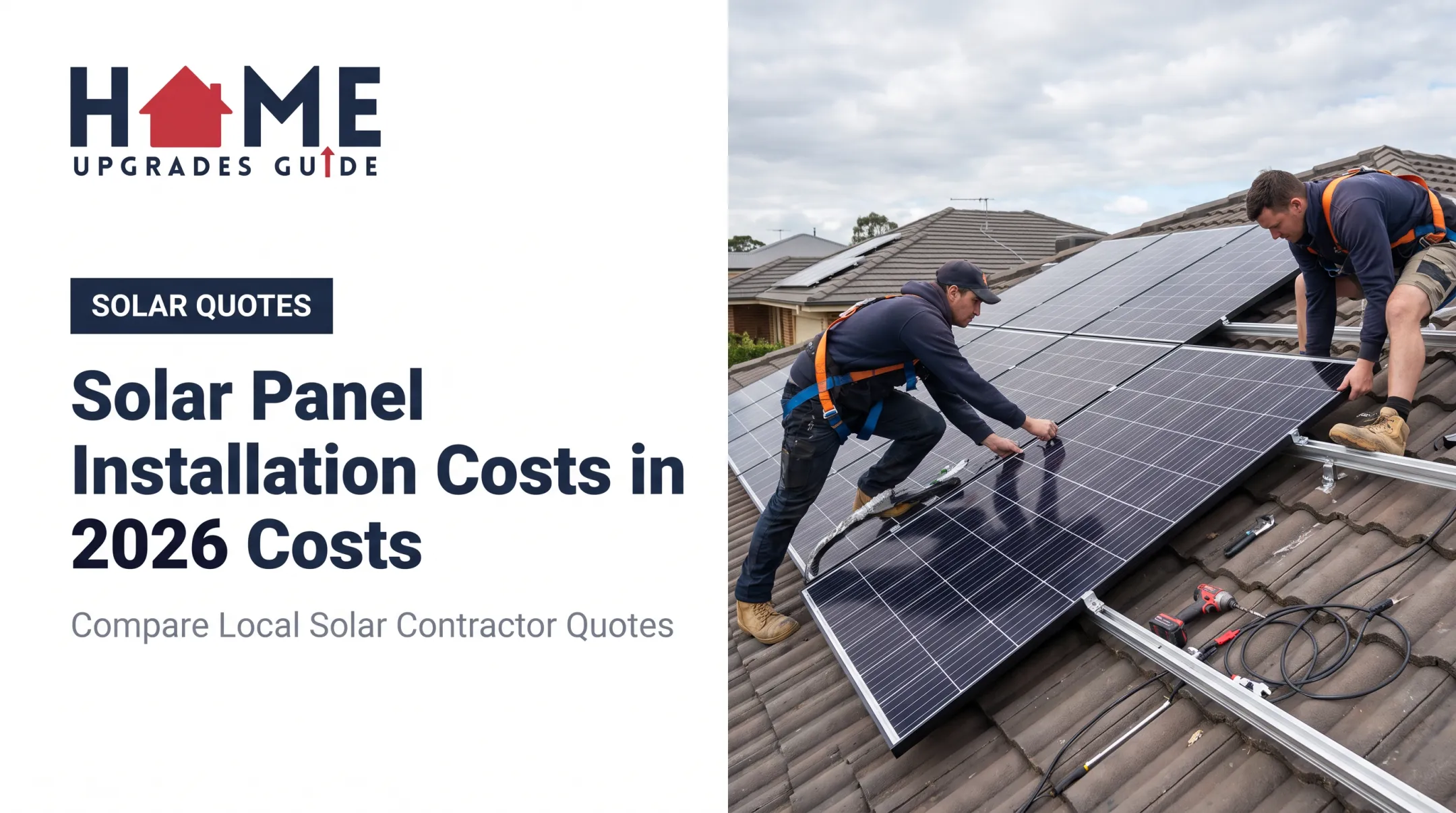

Pricing also depends on more than just the equipment you choose. System size, your roof's shape, your location, and your financing choice all move the final number. Rather than quoting a single "average price," this guide pulls from current 2026 marketplace and government data so you can see where your own quote might land.
We'll cover typical price ranges, cost per watt, real system-size examples, what's actually inside a quote, the factors that shift pricing, and a practical process for checking whether a bid makes sense.
Key Takeaways
- A typical 12 kW residential system runs $27,526 to $33,869 before incentives, based on current national marketplace data
- Panels are one line item; inverters, racking, wiring, permits, and labor fill out the rest of the bill
- System size, roof complexity, location, equipment choice, and battery storage each shift the final quote
- No new federal tax credit applies to systems installed after December 31, 2025
- The cheapest bid isn't automatically the best deal: warranties and production estimates matter just as much
How Much Do Solar Panels Cost in 2026? (Pricing Overview)
"Solar panel cost" actually refers to three different numbers, and mixing them up is how homeowners end up confused or misled. There's the retail price of a single panel, the installed price per watt for a finished system, and the total project cost. For budgeting purposes, the installed price per watt and total cost are what matter.
According to EnergySage's 2026 guide, a 12 kW residential system averages $31,135, with most homeowners seeing bids between $27,526 and $33,869 before any incentives are applied. That works out to roughly $2.29–$2.82 per watt on that example.
EnergySage's broader market data puts typical pricing closer to $2.60 per watt installed.
Typical Price Ranges by System Size
| System size | Category | Installed $/watt | Typical total (before incentives) |
|---|---|---|---|
| 4 kW | Entry-level | $2.89 | $11,560 |
| 6 kW | Small | $2.68 | $16,080 |
| 8 kW | Mid-range | $2.62 | $20,960 |
| 10 kW | Mid-range/larger | $2.58 | $25,800 |
| 12 kW | Larger | $2.56 | $30,720 |
| 15 kW | Larger/advanced | $2.47 | $37,050 |

How size usually maps to a home:
- 4 kW entry-level: modest electricity use and a simple south-facing roof
- 6–10 kW mid-range: most families offsetting a large share of the bill
- 12 kW+ larger systems: high usage, complex roofs, premium equipment, or battery backup
What's Included (and What Isn't)
A standard installed quote typically covers:
- Solar panels and inverter(s)
- Racking and mounting hardware
- Wiring and electrical components
- System design and engineering
- Installation labor
- Permitting, inspection, and utility interconnection
Common exclusions to watch for:
- Roof repair or replacement
- Tree trimming for shade removal
- Electrical panel upgrades
- Battery storage (usually priced separately)
- Financing or dealer fees
Estimating a Rough Price
Multiply the system's wattage by the price per watt for your region to get a ballpark figure. A 7,000-watt system at $2.60/W lands around $18,200 before incentives. That's a starting point, not a quote. Actual production depends on sunlight exposure, roof orientation, shading, local weather patterns, and your utility's rules.
How Incentives Change the Final Price
Here's where many 2026 estimates go wrong. For years, homeowners could count on a 30% federal tax credit shaving a big chunk off their total. That's no longer automatic.
Per IRS guidance, the Residential Clean Energy Credit applied to installations completed through December 31, 2025. There's no new credit for systems placed in service in 2026.
That doesn't mean incentives disappeared entirely. State programs, utility rebates, and net-metering credits still vary widely by location. Check current, official sources before assuming any specific dollar amount applies to your project.
Key Factors That Affect Solar Panel Costs
Your quote reflects more than which panel brand you picked. Technical specs, property conditions, labor markets, and local rules all play a part.
System Size and Household Electricity Use
Your annual kilowatt-hour usage drives system sizing. Homeowners planning to add an EV charger or heat pump should size up now rather than retrofitting later. Available roof area and your desired bill offset (50% versus 100%, for example) also factor in.
Larger systems generally carry a lower price per watt, but a higher total price. Fixed costs like permitting, design, and crew dispatch don't scale down for smaller jobs, so the per-watt discount on big systems shows up clearly in a full project cost breakdown.
Roof, Shade, and Installation Complexity
A simple, single-plane asphalt roof in good condition is the cheapest scenario to install on. Costs climb with:
- Multiple roof planes or steep pitches
- Skylights and dormers
- Tile, metal, or other specialty roofing materials
- Significant shading that requires trimming or microinverters
- Difficult roof access or the need for ground-mount racking
An aging roof is worth addressing before installation. Replacing it later means removing and reinstalling the entire solar array, which adds real labor cost. A proper site assessment should flag tree-trimming needs, trenching requirements, and tricky electrical routing before you sign anything.
Equipment Selection and System Design
Standard panels cost less than high-efficiency premium modules, but efficiency differences matter most when roof space is limited.
String inverters work well and cost less on simple, unshaded roofs. Microinverters and power optimizers cost more but handle partial shading and panel-level monitoring better.
The priciest equipment isn't automatically the smartest buy. Warranty length, documented reliability, degradation rates, and how well a product fits your specific roof matter more than a spec sheet number.
Location, Regulation, and Utility Requirements
Labor rates, permitting timelines, inspection requirements, and electricity prices vary by region, and so does solar pricing. For comparison, state-level averages from current marketplace data show a clear spread:
- Arizona: around $2.27/watt
- Pennsylvania: around $2.60/watt
- Tennessee: around $3.50/watt
Net-metering and export-credit rules also differ by state and even by utility within a state, which affects long-term savings far more than the sticker price does.

Solar Cost Breakdown: What You Are Really Paying For
Panels are one piece of a much bigger project. An itemized quote lets you compare installers on equal footing instead of guessing at what's bundled in.
Initial Equipment
Panels, inverters, racking, wiring, and monitoring hardware make up a meaningful but not dominant share of total cost. NREL's 2025 report found equipment accounts for roughly 43% of a residential system's price, with labor and other soft costs making up the remaining 57%.

Equipment quality, efficiency ratings, and warranty terms all shift this line item, but it remains less than half the bill.
Installation, Design, Permits, and Interconnection
This bucket covers soft costs that often rival equipment pricing:
- Site surveying and engineering
- Labor and project management
- Permitting, inspections, and utility interconnection
Local permitting offices and inspection timelines vary, so two similar systems in different towns can carry different price tags.
Operating, Maintenance, and Repair Costs
Solar systems need relatively little upkeep, but it's not zero:
- Periodic panel cleaning in dusty or low-rain climates
- Inverter replacement, typically once over a 25-year panel lifespan
- Roof-related service if work is needed around the array
- Occasional service calls for monitoring issues
Check exactly what labor, parts, and shipping each warranty covers before assuming it's "all included."
Financing and Ownership Costs
| Option | Who owns it | Payment structure | Watch for |
|---|---|---|---|
| Cash purchase | Homeowner | One-time | No financing cost, highest upfront outlay |
| Solar loan | Homeowner | Monthly payments | Interest, dealer fees baked into principal |
| Lease | Provider | Monthly payment | Rate escalators, home-sale complications |
| PPA | Provider | Per kWh produced | Usage-based cost, transfer terms at sale |
Compare the total contract cost, not the monthly payment. Loan markups can be significant; some lenders raise the financed principal well above the cash price by folding in dealer fees that aren't always clearly disclosed.
Low-Cost vs High-Cost Solar
A lower bid using standard equipment can still deliver solid value if it includes proper documentation, adequate warranties, and qualified installation.
A higher bid is justified when it solves a real problem: a complex roof, battery backup, an electrical panel upgrade, or a stronger production guarantee. Judge that premium by whether it buys something you actually need.
How to Estimate the Right Solar Budget—and Avoid Costly Mistakes
Start with hard numbers, not guesses:
- Pull 12 months of electricity bills to see your actual usage pattern and current rate
- Note your roof's condition, age, and shading to flag any pre-installation work
- Factor in future electricity needs, such as an EV or heat pump
- Set a realistic payment comfort level, whether cash or monthly financing
Price per watt helps you compare systems of different sizes, but it's not the whole picture. Weigh annual production estimates, 25-year degradation assumptions, battery capacity if included, and total financing charges alongside that figure.
Request an itemized proposal that covers:
- System size, panel and inverter models
- Production estimates and warranty terms
- Permit and interconnection fees
- Any roof or electrical exclusions
- The full financed cost if you're not paying cash
Common mistakes to avoid:
- Budgeting only for panels instead of the full installed system
- Sizing a system off square footage rather than actual kWh usage
- Ignoring an aging roof that needs work first
- Treating projected savings as a guarantee rather than an estimate
- Accepting the first quote without comparing contractors
If you'd rather not vet installers one by one, HomeUpgradesGuide lets you request free solar project quotes from local contractors. You stay in control of which professionals you talk to and when, with no obligation to move forward.
Before signing anything, confirm the contractor's licensing, insurance, references, and complaint history. Review workmanship and equipment warranties separately, and get any change-order policy in writing.
Conclusion
Solar panel costs in 2026 come down to the complete installed system, not just the sticker price on a panel. A realistic budget starts with your actual electricity needs, compares price per watt alongside total cost, accounts for site-specific add-ons, and factors in financing terms honestly.
From there, comparing qualified local contractors is what turns a rough estimate into a real plan. When you're ready to see what installers in your area are quoting, HomeUpgradesGuide can connect you with vetted local professionals for free, no-obligation quotes, so you can compare your options before deciding anything.
Frequently Asked Questions
What is the average cost for one solar panel?
A single panel typically retails for $150 to $400 depending on wattage and brand, but that figure doesn't reflect installed system pricing. A fully installed system runs closer to $2.50–$2.90 per watt once labor, permits, and hardware are included.
What is the price of a 500-watt solar panel?
Pricing varies by brand, efficiency rating, and purchase volume, generally falling between $150 and $350 for a single panel. This retail price has little bearing on what a complete home solar installation costs, since labor and other equipment make up most of that total.
Is a solar panel cheaper than electricity?
Owned solar electricity is often cheaper than utility power over 20-25 years, but results depend heavily on your installation price, financing terms, local utility rates, available sunlight, and export-credit rules. A poorly financed system can erase those savings.
Is it worth getting solar panels in PA?
It depends on your electricity rate, roof suitability, system price, and Pennsylvania's net-metering rules, which currently credit exported power at the full retail rate up to your usage. Run the numbers against your specific home before deciding either way.
How much does it cost to install a solar panel system in Pennsylvania?
Pennsylvania systems average around $2.60 per watt, with a typical 12.66 kW system costing roughly $27,961 to $37,829 before incentives, per EnergySage's October 2026 state data. System size, roof conditions, and equipment choice will move your specific quote.
Can I still claim a tax credit for solar panels in Pennsylvania?
No new federal Section 25D credit applies to installations completed after December 31, 2025, though Pennsylvania's net-metering program remains separate from federal tax rules. Check current IRS guidance and official PA program resources, since eligibility depends on your specific situation.