
Introduction
Shopping for solar panels eventually leads to a fork in the road: microinverters or power optimizers? Both go beyond a basic string-inverter setup, and the choice affects far more than price.
It shapes how your system handles shade, how you monitor performance, what happens when equipment fails, and whether a battery fits in cleanly later. A Lawrence Berkeley National Laboratory report found both options carry measurable price premiums over standard systems, so the decision has real budget consequences.
This guide breaks down how each technology works, where they differ in practice, and which roof and homeowner situations tend to favor one over the other.
Key Takeaways
- Microinverters convert DC to AC at each panel; power optimizers condition DC power, then send it to a central inverter
- Both offer panel-level monitoring, useful for shaded or multi-orientation roofs
- A failed microinverter typically affects only its panel; a failed central inverter can stop the whole array
- Optimizer systems still depend on the central inverter's warranty, capacity, and replacement terms
- The right choice depends on roof complexity, battery plans, and the full system quote, not the inverter label alone
Microinverters vs. Power Optimizers: Quick Comparison
Before going deep into mechanics, here's the side-by-side view most homeowners actually want.
| Factor | Microinverters | Power Optimizers |
|---|---|---|
| Conversion method | DC to AC at each panel | DC conditioning at each panel, AC conversion at a central inverter |
| Panel independence | Fully independent operation | Depends partly on the central inverter |
| Shade handling | Strong for mixed orientations and uneven shade | Reduces mismatch, but string design still matters |
| Upfront cost | Generally higher | Moderate, but includes a central inverter cost |
| Failure scope | Limited to one panel | Central inverter failure can halt the array |
| Battery coupling | AC-coupled | Often DC-coupled, depending on equipment |
Conversion Method and Panel-Level Performance
A microinverter does the entire job of turning sunlight into usable AC power right at the panel. A power optimizer only adjusts the panel's voltage and current. The DC power still travels to a central inverter for conversion, matching the architecture in SolarEdge's residential power optimizer specs.
Both approaches give you panel-level monitoring, so you can spot a dirty or underperforming panel without climbing on the roof. The difference shows up when something goes wrong:
- Microinverters: One panel's issue doesn't change how other panels operate
- Power optimizers: Panels still report individually, but all of them funnel through one inverter
Shade, Roof Complexity, and Cost Basics
Complex roofs with dormers, chimneys, or multiple orientations tend to benefit most from either technology. But don't assume a shaded panel magically produces full power. It still loses output. What these devices do is stop that one panel from dragging down the entire string.
On cost, both add to your quote compared to a basic string inverter. The exact premium varies by installer and local market, which is why generic percentages aren't reliable. More on real numbers below.
What Are Microinverters and Power Optimizers?
Microinverters
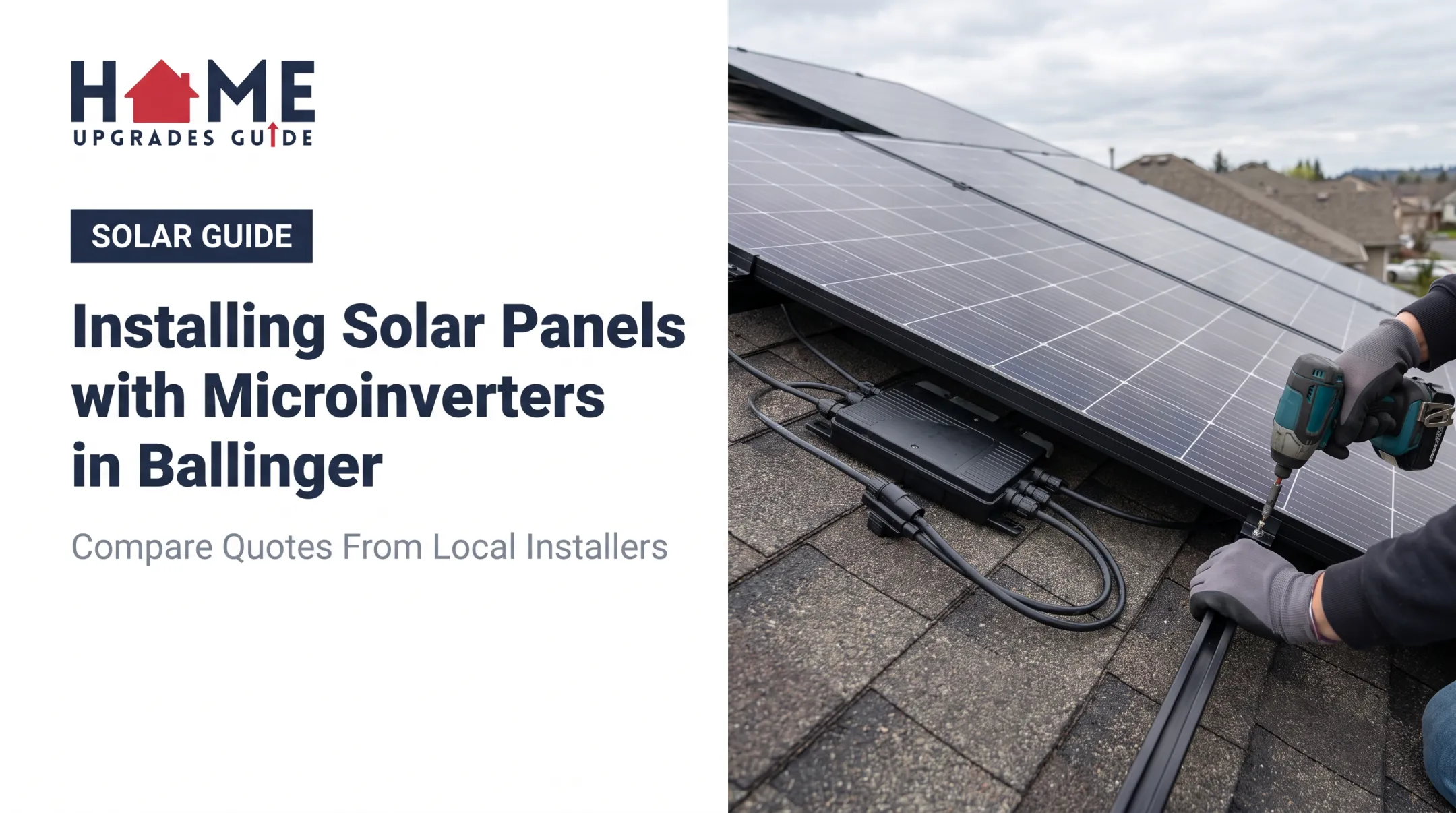
A microinverter is a small inverter mounted at or near each solar panel. It completes the full DC-to-AC conversion right there, instead of sending raw DC power across the roof to one central unit.
This setup means one panel's lower output doesn't set the "operating point" for the rest of the array, the way it can in a traditional string system. Enphase's product overview describes this as each panel operating separately, so an issue at one location doesn't necessarily reduce others' output.
Trade-offs to weigh:
- More individual components on the roof means more potential points of service
- Rooftop access is needed for repairs, unlike a wall-mounted central inverter
- Battery compatibility typically runs through AC coupling
- Manufacturer and labor warranty terms vary significantly and deserve a close read
Use cases. Microinverters tend to fit roofs with multiple orientations, intermittent shade from trees or neighboring structures, or irregular layouts where a few panels face a different direction than the rest. They also suit homeowners planning to add panels incrementally, since each new panel joins as its own independent unit.

That flexibility is a design advantage, not a guaranteed production boost. An Enphase installer interview from Tauber Solar's case study notes that module-level shade handling let the installer consider roof areas that might otherwise have been skipped during planning. It's a field anecdote, not a controlled study, but it illustrates the practical planning benefit.
Power Optimizers
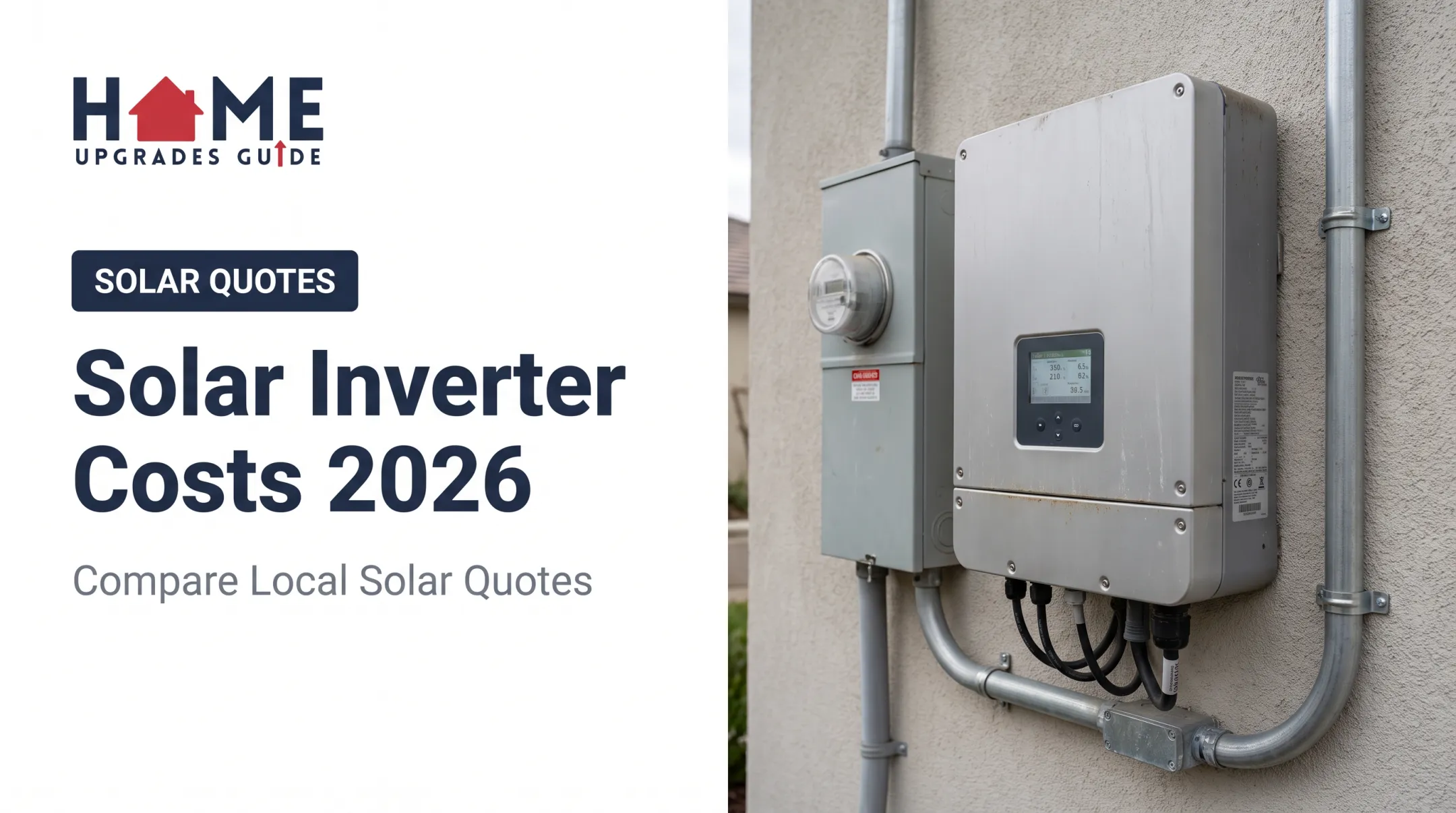
A power optimizer is a module-level DC-to-DC device. It adjusts each panel's voltage and current before sending electricity downstream to a central string inverter. Think of it as a hybrid: you get panel-level performance tracking, but the final AC conversion still happens in one place.
You still get panel-level maximum power point tracking and monitoring. A single central inverter converts the conditioned DC to usable AC.
Trade-offs to weigh:
- The system still depends on the central inverter functioning properly
- Optimizers themselves are roof-mounted and need access for service
- Central inverter warranty length often differs from the optimizer warranty
- Battery compatibility can lean toward DC coupling, depending on the equipment brand
Use cases. Power optimizers suit homeowners who want panel-level performance data but prefer keeping a central inverter in the design. They fit especially well when the roof has some shade but the system size and layout are already well defined.
A Tigo case study from a shaded roof project in Germany reported average "reclaimed energy" of 4.5% over 7.5 years on a partially shaded array, with winter months showing 10-12%. That's a manufacturer-reported figure for one site, not a universal result, but it shows the kind of improvement optimizers are designed to target.
Microinverters vs. Power Optimizers: What Is Better?
Neither technology is categorically "better." Microinverters distribute the full conversion hardware across the roof. Power optimizers distribute panel-level conditioning but keep conversion centralized. The right pick depends on your roof, budget, and goals.
Performance in Shade and Mixed Orientations
Results depend heavily on shade timing, panel layout, and installation quality. The IEA-PVPS Task 13 report compared a standard string inverter against module-level optimizer systems across multiple test days:
- On a cloudy day, optimizer systems outperformed the string system by 3.1% to 4.2%
- On a clear day, the string system outperformed optimizers by 1.3% to 2%
- Annual yield between the string system and one optimizer brand was within 0.05%

The takeaway: under light shade, module-level electronics can sometimes fall slightly behind due to conversion losses. Under heavier, mismatched shade, they pull ahead. Your specific roof and shade pattern matter more than brand marketing.
Failure Scenarios and Access
- Microinverter failure: Generally limited to the connected panel while the rest of the array keeps producing
- Central inverter failure: Can stop production across the full array until repaired; optimizer systems share this risk because they still rely on one central unit
- Rooftop replacement: Swapping a roof-mounted microinverter or optimizer usually needs roof access and more labor than servicing a wall-mounted central inverter
Warranties: Read Past the Headline Number
All three major manufacturers advertise 25-year product warranties on their module-level electronics, but the fine print varies:
- Enphase: 25 years from activation on IQ7, IQ8, and IQ9N microinverters; excludes uninstall/reinstall labor, per its limited warranty terms
- SolarEdge: Optimizers carry 25 years; most inverters carry just 12 years, and the base warranty excludes labor and on-site work unless agreed separately
- Tigo: 25 years from installation on TS4 products, with a reduced 5-year term if a stated monitoring-connection condition isn't met
For an optimizer system, always ask about the central inverter's warranty length separately. A 25-year optimizer warranty doesn't help much if the inverter needs replacing in year 12.
Batteries and Future Expansion
- AC-coupled (common with microinverters): The battery converts AC to DC for storage, then back to AC for use, adding steps but often simplifying retrofits
- DC-coupled (common with optimizer systems): PV power can charge a battery before AC conversion, with fewer steps, per SolarEdge's comparison
- Expansion limits are model-specific: Enphase IQ8M/IQ8A caps 11 units per 20A branch and limits mixing with older IQ7 units in some setups; SolarEdge's S440 string allows 8–25 units with a 5,700W usable ceiling
Situational Recommendations
- Choose microinverters if your roof has complex geometry or varied shade, you plan panel-by-panel expansion, and the quote justifies the added cost
- Consider power optimizers if you want panel-level data with a central inverter, plan a DC-coupled battery, or the warranty and service terms are stronger
- Compare both against a standard string-inverter quote if your roof is simple and mostly unshaded; neither MLPE option is required just because it is available
Real-World Examples and Solar Quote Checklist
Two Common Homeowner Scenarios
Scenario 1: The complex, partially shaded roof. A homeowner has a two-story colonial with a dormer casting afternoon shade on four panels and a chimney shading two more in the morning. Microinverters let each panel operate independently, so the shaded units don't pull down production from the unshaded majority. The trade-off is a higher equipment bill and more rooftop units to maintain long-term.
Scenario 2: The simple, well-defined array. A ranch-style home has a single south-facing roof plane with minor shading from one nearby tree. Power optimizers address that localized mismatch while keeping a central inverter, which can simplify future service calls since there's one main unit instead of 20-plus. The homeowner should still confirm the inverter's own warranty term before signing.

Quote-Comparison Checklist
Before accepting any solar proposal, make sure it specifies:
- Panel and inverter/optimizer models, including brand and series
- System size in kW and projected annual production in kWh
- Shade assumptions used in the production estimate
- Monitoring platform and what data it tracks
- Battery readiness and whether coupling is AC or DC
- Equipment and labor warranty terms, including removal and reinstallation
- Central inverter replacement terms, if applicable
- Roof-access plans for future service
- Installer's responsibility if equipment fails post-installation
Getting these details in writing from more than one contractor is the best way to avoid surprises later.
HomeUpgradesGuide connects homeowners with vetted local solar contractors through a quick, address-based process. You can request free project quotes and compare proposals side by side. The process takes about two minutes, and you decide who to contact and when.
Conclusion
Microinverters and power optimizers both solve real limitations of a basic string-inverter system, but neither is a universal upgrade. Which option fits depends on your:
- Roof layout and shade pattern
- Battery and expansion plans
- Budget and long-term ownership goals
Compare full system proposals, not just the inverter label on the spec sheet. Ask each contractor to put production assumptions, maintenance access, and long-term ownership costs in writing before you commit.
Frequently Asked Questions
What is the difference between a power optimizer and a microinverter?
A microinverter converts DC to AC right at each panel, with no separate central inverter needed. A power optimizer conditions DC power at each panel, then sends it to a central inverter for conversion.
Are microinverters worth the extra money?
They can be, especially for complex roof layouts, variable shade, or planned future expansion. Whether it's worth it for your home depends on the complete quote and your specific site design.
Are power optimizers worth it for solar panels?
They offer panel-level optimization and monitoring while keeping a central inverter, which can be valuable on moderately shaded roofs. Evaluate the central inverter's warranty, battery compatibility, and roof conditions before deciding.
Which solar optimizers are the best?
The best choice depends on panel compatibility, warranty and labor coverage, monitoring features, and your battery plans. Ask your installer for current, independent comparisons rather than relying on brand reputation alone.
Are microinverters better than string inverters?
Microinverters often perform better on shaded or complex roofs, while a basic string inverter may suit a simple, unshaded roof at a lower upfront cost. Power optimizers sit in between, offering panel-level benefits within an optimized-string configuration.