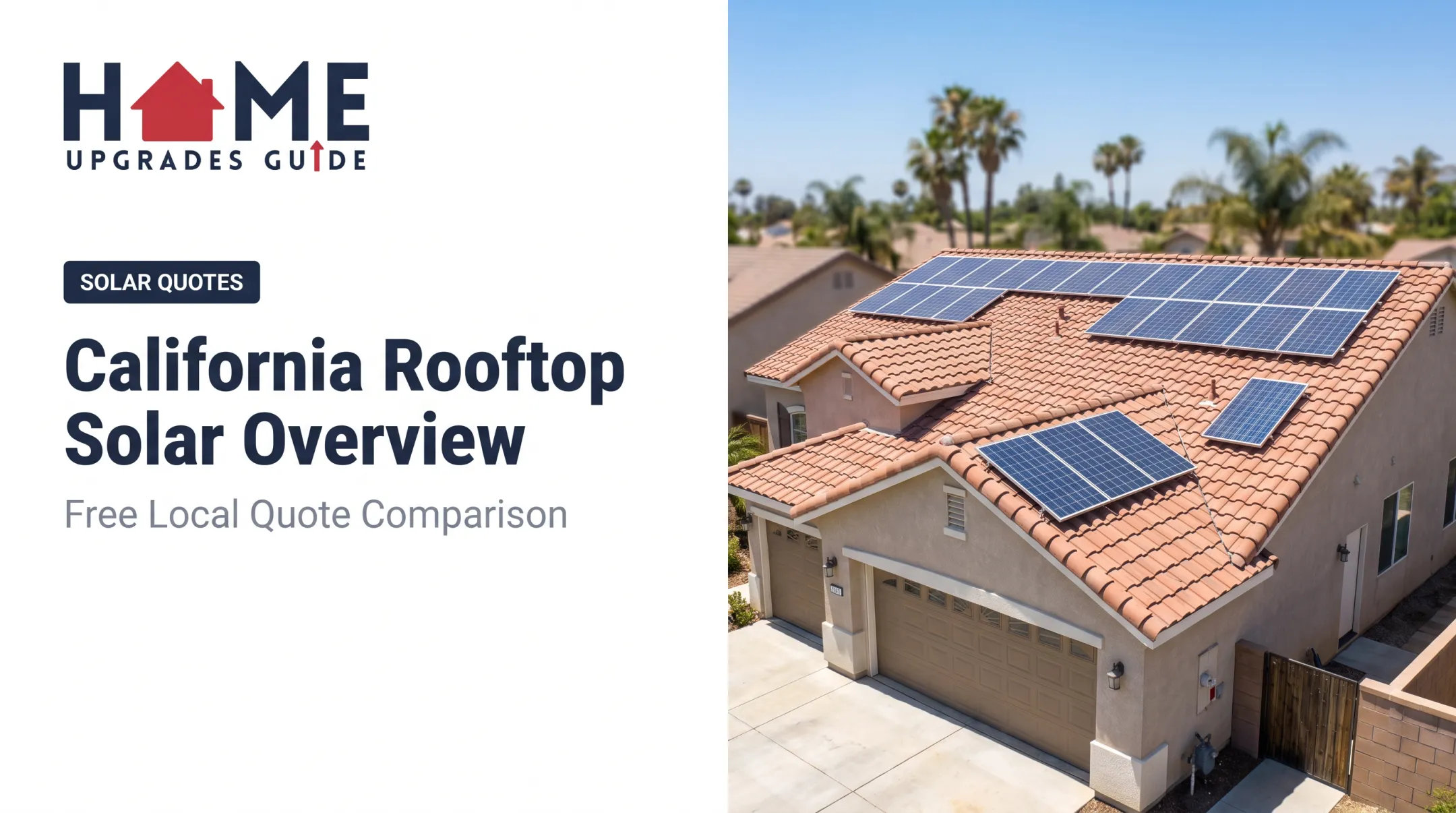

Many homeowners assume there's one statewide solar incentive everyone gets. There isn't. Your savings depend on which utility serves you, when you apply, your household income, and whether you add storage.
This article identifies the programs that may apply to you, explains how NEM 2.0 and NEM 3.0 change the math, and gives you a checklist for evaluating quotes. Program terms and funding change often, so confirm details with official sources before signing anything.
Key Takeaways
- No universal California solar rebate exists: eligibility hinges on your utility, property type, and timing.
- Export credit rules (NEM 2.0 vs. NEM 3.0) directly shape your system's payback period.
- Federal, state, utility, and income-qualified programs must each be checked separately.
- Confirm every detail with CPUC, CEC, your utility, or the IRS before signing a contract.
California Rooftop Solar Programs at a Glance
California homeowners typically encounter six program categories, each solving a different problem:
- Utility interconnection and export-credit rules: determine ongoing bill credits for excess solar production
- Federal tax benefits: reduce upfront project cost through a tax credit
- State or utility rebates: offset storage or equipment costs in specific territories
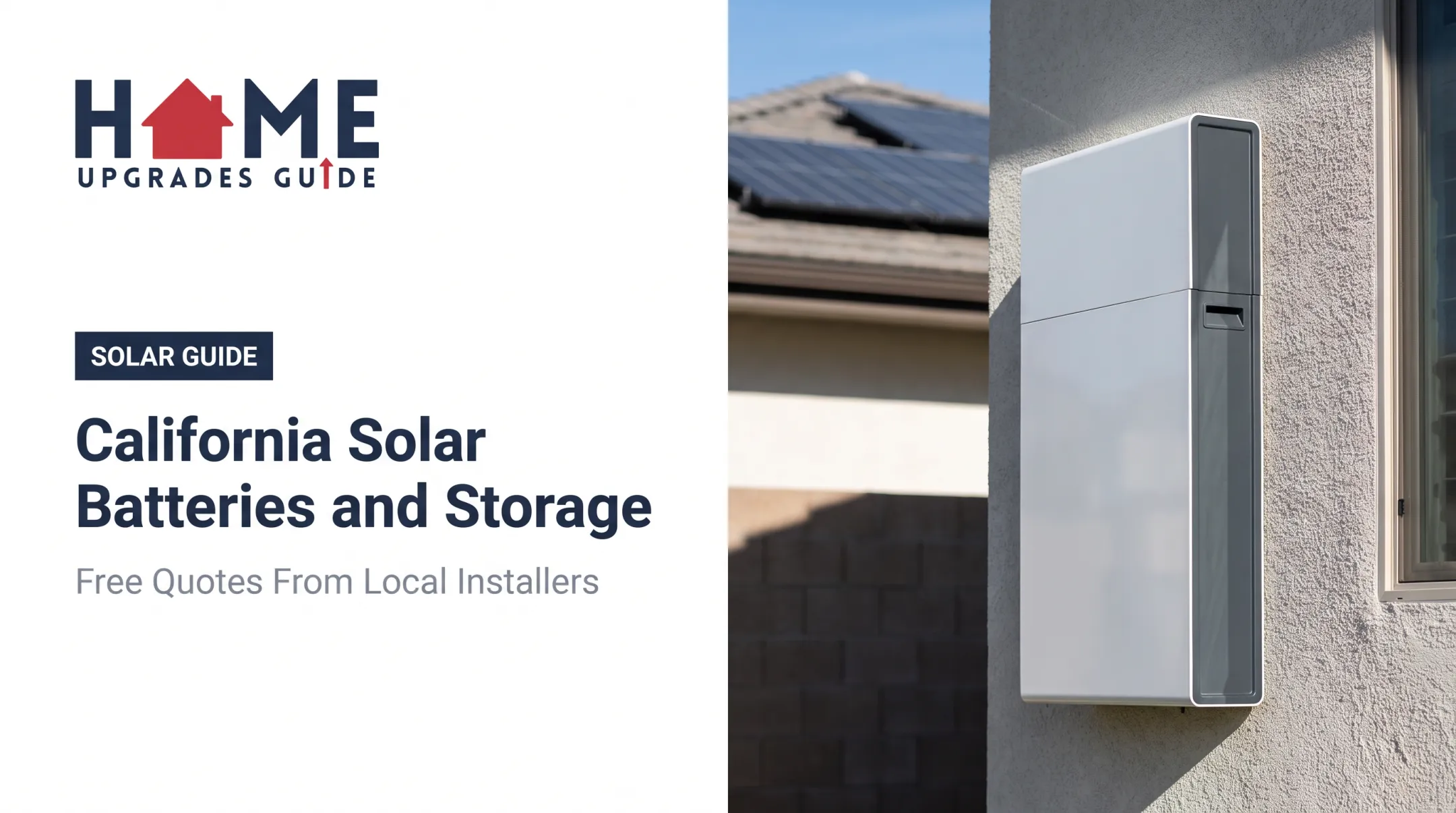
- Battery-storage incentives: lower the cost of adding a home battery
- Income-qualified and disadvantaged-community programs: provide no-cost or reduced-cost systems for eligible households
- Local rebates and shared/community solar: fill gaps for renters or homeowners with unsuitable roofs
Who Administers What
The California Public Utilities Commission (CPUC) regulates investor-owned utilities (PG&E, SCE, and SDG&E) and oversees net billing and low-income solar programs. The California Energy Commission (CEC) handles building codes and historical construction incentives. Publicly owned utilities, like SMUD and LADWP, set their own tariffs and incentive programs independent of CPUC rules.
Local governments sometimes layer on permitting fee waivers or additional rebates. Federal programs run through the IRS, separate from any state process.
Before estimating savings, identify your serving utility. PG&E, SCE, SDG&E, and publicly owned utilities use different export rates, application processes, and program menus. A program open in SMUD territory may not exist for a PG&E customer, and vice versa. Some programs listed on older websites are closed or waitlisted. The California Energy Commission's New Solar Homes Partnership, for example, stopped accepting new reservations in 2018 and ended entirely at the close of 2021.

How Net Energy Metering Affects California Solar Savings
A grid-connected solar system works simply in theory: your home uses solar power first, sends surplus generation to the grid, and pulls from the grid when the sun isn't producing enough. The complexity comes from how that surplus gets valued — and that's where net energy metering (NEM) comes in.
NEM 2.0 vs. the Net Billing Tariff
California has moved through several export-compensation frameworks:
| Feature | NEM 2.0 (legacy) | Net Billing Tariff (NEM 3.0) |
|---|---|---|
| Applications | Closed before April 15, 2023 | Accepted from April 15, 2023 onward |
| Export value | Retail-rate credits | Avoided Cost Calculator-based export credits |
| Rate requirement | Time-of-use with interconnection fee | Required electrification TOU plan |
Existing NEM 2.0 customers keep their tariff for 20 years from interconnection. New applicants fall under the Net Billing Tariff, which prices exported energy hour-by-hour and season-by-season rather than at a flat retail rate, according to CPUC's net billing page.
Export value is usually below retail, though it can occasionally exceed retail during late-summer evening peaks.
This shift is why self-consumption and battery storage matter more under NEM 3.0 than they did before. A battery lets you store midday solar production and use it during evening hours instead of exporting it for a lower credit. Not every household needs a battery; it depends on usage patterns, rate structure, and budget.

The Cost-Shift Debate
Regulators and solar advocates disagree sharply here. The CPUC's 2022 decision establishing the Net Billing Tariff found that legacy NEM arrangements shifted grid-maintenance costs onto non-solar customers, including lower-income households. The CPUC's Public Advocates Office later estimated that cost shift at $8.5 billion by the end of 2024, according to the Public Advocates Office.
Solar industry groups push back hard on that number. The California Solar and Storage Association argues that rooftop solar provides net ratepayer benefits once avoided infrastructure costs and local generation value are counted — not a cost shift at all. Both figures use different accounting assumptions, so treat either as a disputed estimate, not settled fact.
Reviewing a Quote's Financial Assumptions
Before trusting a payback-period projection, check these inputs:
- Annual production estimate — does it match your roof's actual sun exposure?
- Household usage pattern — does the quote reflect your real electric bills, not an average?
- Time-of-use rate — which tariff is assumed, and is it the one you'll actually be on?
- Export credit value — is it based on current Net Billing Tariff rates or outdated retail assumptions?
- Battery dispatch logic — how does the system decide when to charge or discharge?
- Degradation and escalation — does the model account for panel output decline and future utility rate increases?
Projected payback is an estimate, not a guarantee. Ask your installer to show you both a conservative and an optimistic scenario.
California Solar Incentives, Rebates, and Battery Programs
Federal Tax Credit Status
The Residential Clean Energy Credit currently covers 30% of eligible installation costs for systems placed in service through December 31, 2025. Installations completed after that date won't qualify, according to IRS guidance. Prepaying for equipment before year-end doesn't preserve eligibility if installation finishes later. The completion date governs.
Battery storage with at least 3 kWh capacity qualifies alongside solar. The credit is nonrefundable but can carry forward to future tax years. Confirm your personal situation with a qualified tax professional, since landlord-owned properties and homes outside the U.S. don't qualify.

Battery-Storage Incentives
The Self-Generation Incentive Program (SGIP) funds battery storage, but availability varies dramatically by territory:
- SCE's standard ratepayer-funded budgets have closed to new applicants
- The Residential Solar and Storage Equity (RSSE) track, authorized at up to $3.10 per watt for solar and $1.10 per watt-hour for storage, targets income-qualified households but reports waitlists in several territories
- Publicly owned utilities like SMUD run their own battery participation incentives tied to specific rate plans and dispatch requirements
New SGIP storage participants generally must enroll in an approved demand-response program, so budget that operational commitment into your decision.
Income-Qualified and Disadvantaged-Community Programs
Several programs specifically target lower-income households:
- DAC-SASH: no-cost rooftop solar for CARE/FERA-eligible homeowners in qualifying disadvantaged communities, administered through GRID Alternatives
- SOMAH: supports solar (and integrated storage) for deed-restricted affordable multifamily housing with five or more rental units
- RSSE single-family pathway: available to households at or below 80% of area median income, or those already enrolled in CARE, FERA, or ESA
Eligibility typically requires income verification, confirmation of utility territory, and use of approved contractors and equipment. Don't assume a program applies just because you've seen it mentioned online.
Other Potential Savings
Local governments occasionally waive permitting fees or offer small rebates. New-construction requirements under the state building code can also affect cost if you're building rather than retrofitting.
Community solar programs exist for households that can't install rooftop systems. Before combining any of these, verify stacking rules with the administering agency. Some programs explicitly exclude combination with others.
Who May Qualify — and What California Homeowners Should Check
Who May Qualify: What California Homeowners Should Check
Eligibility isn't just about income or utility territory. Before you move forward with an installation, confirm:
- Ownership status: you own the home, or your landlord has approved the project
- Utility service territory: PG&E, SCE, SDG&E, or a publicly owned utility
- Roof condition: age, structural integrity, and remaining years before replacement
- Shade exposure: trees or structures that limit production
- Electrical panel capacity: whether it supports solar and battery addition without an upgrade
- Property type: single-family, multifamily, or rental
- Income qualification: whether you meet thresholds for DAC-SASH, RSSE, or similar programs
- Storage inclusion: whether the project includes battery backup
Renters and Unsuitable Roofs
Renters, multifamily residents, and homeowners with shaded or aging roofs often need a different path. Options include:
- Landlord-approved rooftop systems with shared billing arrangements
- Community or shared-solar subscriptions where rooftop access isn't possible
- Income-qualified programs designed for renters who can't install panels
- Properly certified plug-in or balcony solar devices, where locally permitted
Also check HOA restrictions, homeowners insurance implications, and local permitting rules. These can derail a project after a contract is signed if you do not confirm them upfront.
How to Compare California Solar Quotes
A good solar quote should be itemized, not a single bottom-line number. Request documentation on:
- System size and expected annual production
- Specific equipment models (panels, inverter, battery if included)
- Workmanship and equipment warranties
- Monitoring software and maintenance terms
- Permitting and interconnection handling
- Financing charges, including loan interest or lease escalators
- The export-credit rate the quote assumes
Questions to Ask Every Installer
- Am I eligible for NEM 2.0, or will this fall under the Net Billing Tariff?
- What export-credit value did you assume, and where did that number come from?
- How will the battery prioritize backup loads during an outage?
- Does this system account for future EV charging or heat-pump electricity use?
- What are the cancellation terms if I change my mind?
- Who files the incentive paperwork — you or me?
Comparing multiple bids side-by-side is the single best way to catch inflated production estimates or vague warranty language.
HomeUpgradesGuide offers one way to do this without cold-calling installers yourself. Enter your address, get matched with vetted local solar professionals, and decide which ones to contact and when. The service doesn't guarantee incentive eligibility, pricing, or contractor performance. It simply streamlines the comparison-shopping step so you're not starting from zero.
Frequently Asked Questions
Is it worth getting solar in California now?
It depends on your utility tariff, electricity usage, roof condition, financing terms, and any incentives you qualify for. Compare a personalized quote and payback scenario rather than relying on a generic statewide answer.
Is California forcing solar panels?
No. The state building code requires solar on most new single-family construction, with specific exceptions, but it doesn't mandate retrofits on existing homes. Check the current California Energy Commission code and your local requirements for details.
Will California allow balcony solar?
Plug-in or balcony solar is a developing, regulated category under recently enacted legislation. Confirm the current law's effective date, required equipment certification, and utility notification rules before purchasing any device.
What is NEM 3.0 in California?
NEM 3.0, officially the Net Billing Tariff, is California's current export-credit framework for new solar applicants. Its financial impact depends on your utility's rules, your usage timing, system design, and whether you add storage.
What California solar incentives are available to homeowners?
Categories to investigate include the federal tax credit, utility or state battery incentives, income-qualified programs like DAC-SASH, local rebates, and public-power offerings. Availability and funding levels change, so verify eligibility at the time you apply.